Roofing Contractor Near Me: 10 Must-Have Credentials in NJ
Homeowners in New Jersey face a specific mix of coastal wind, wet springs, freeze-thaw cycles, and sunbaked summers. A roof that looks fine in October can start shedding shingles after one March nor’easter. When someone types roofing contractor near me or roof repairman near me after a leak shows up over the kitchen, they usually need help quickly. Speed matters, but credentials matter more. The right contractor can stop a leak the same day and build a roof that rides out a decade of storms. The wrong one may leave you with curled shingles, voided warranties, and a fight with your insurer.
I have spent years on NJ roofs from Cape May to Sussex County, bidding jobs, tearing off layers, and sitting at kitchen tables with homeowners to explain the price of a new roof. The contractors who stand behind their work share the same credentials. Below are the ten must-haves I look for when I size up roofing companies in New Jersey, along with why each one saves you money and stress.
Why credentials carry extra weight in New Jersey
New Jersey is a small state with big climate swings. Atlantic air pushes salt and wind inland, and the Delaware Valley funnels storms north. In January, snow melt refreezes in gutters every night. By August, ridge lines bake at 140 degrees on dark shingles. Asphalt roofs expand and contract through those cycles, adhesives soften, then re-harden. A roof that is merely adequate in a milder climate fails early here. Credentials are your proxy for skill and discipline under those conditions, not just paperwork.
On top of weather, New Jersey has specific licensing, insurance, and code requirements. The state enforces consumer protection rules that are often ignored by out-of-state crews chasing storms. An NJ-registered business with local references has learned the hard lessons of the market. That is who you want on your roof.
1) Active NJ Home Improvement Contractor registration
In New Jersey, any company performing roof repair or roof replacement must be registered as a Home Improvement Contractor with the Division of Consumer Affairs. This is not optional. Ask for the HIC number and verify it on the state website before you sign. I have seen contractors try to pass off an old number from a dissolved LLC or a license from a neighboring state. If the registration is lapsed, you have weaker consumer protections and little recourse if a dispute turns ugly.
Registration alone does not make someone competent, but it filters out the fly-by-night operators. It also signals a basic level of business stability, which matters if you expect them to honor a workmanship warranty.
2) Proper insurance and bonding, named on your certificate
Roofing is a high-risk trade. Falls happen, ladders slip, shingles end up on cars. You want two documents before material hits your driveway: proof of general liability insurance and proof of workers’ compensation. The liability policy should cover at least one million dollars per occurrence. Workers’ comp must be current and applicable to roofing operations, not just “carpentry.”
Do not settle for a photocopy of a generic certificate. Ask to be named as a certificate holder so the insurer issues a document straight to you. That simple step flushes out fakes. I once met a homeowner in Bergen County who accepted a stale certificate, only to learn a month later that the crew was paid as independent contractors with no workers’ comp. A helper fell, fractured an ankle, and the claim circled back to the homeowner’s policy. Spend five minutes confirming coverage and you will sleep better while the crew is on your roof.
3) Manufacturer certifications that match your chosen system
Every major shingle manufacturer offers tiers of contractor certification tied to training, installation audits, and warranty levels. In New Jersey, the common badges include GAF Master Elite, CertainTeed Select ShingleMaster, and Owens Corning Platinum Preferred. These are not vanity stickers. They unlock longer system warranties, sometimes up to 25 years on workmanship when installed under exact specifications.
Here is where experience matters. A certification has value only if the contractor builds the entire system, not just the shingles. I want to see compatible underlayment, starter, cap, and flashing components from the same brand family, or a documented equivalent approved by the manufacturer. If you are told brand mixing is fine without a written specification, you risk a denied warranty later. A certified installer is also more likely to register your warranty properly. I have re-roofed houses where the warranty was never registered, even though the homeowner paid for it.
4) Permit compliance and code fluency town by town
New Jersey leaves some roofing permit decisions to municipalities. In many towns a straight re-roof may not need a permit if you keep sheathing intact. Others require a permit for tear-offs or when changing ventilation. A contractor who works across counties keeps a running list and confirms with your building department before starting. If you hear, “We never pull permits in this town,” push back. Permit requirements protect you on resale when a home inspector asks for documentation.
Code fluency shows up in the details. Ice and water shield must extend at least 24 inches inside the warm wall above the eaves. Valleys need proper underlayment laps with correct directions, not flipped because it is faster for the right-handed installer. Nail patterns change with roof pitch and shingle type. These are the small choices that separate a roof that lasts 25 years from one that lifts after five wooden winters.
5) Ventilation and moisture diagnostics, not just tear-off and go
The best NJ roofers start with diagnostics. Before quoting the price of a new roof, they inspect attic ventilation, soffit intake, ridge or roof exhaust, and bathroom fan terminations. I carry a hygrometer and an infrared camera on initial visits. If I smell mildew in a January attic, I check for blocked soffits and bath fans venting into the attic. Without balanced ventilation, asphalt shingles overheat, adhesives cook, and warranties get voided.
Ventilation upgrades are not upsells, they are prevention. In Morris County, I replaced a 12-year-old architectural shingle roof that failed early because blown-in insulation buried the soffit vents. We installed baffles at the eaves, cut a continuous ridge vent, and added two roof vents above a long hallway. The new roof will run cooler every summer, and the plywood will stay dry through winter. Ask your contractor to show a plan for intake and exhaust, not just new shingles.
6) Flashing and detail mastery around NJ problem areas
Most leaks I fix are not shingle failures. They are flashing errors. New Jersey homes have complicated rooflines: re-entrant valleys, stone chimneys, dormers, and skylights that break plane. Credentials here are hands-on skills. If a contractor proposes face-sealing a chimney with caulk and a prayer, find another estimate.
Look for step flashing installed shingle by shingle along sidewalls, never continuous “J” flashing tucked under siding. Chimney flashings should include a base, step, counterflashing cut into mortar joints, and proper cricket saddles on the uphill side of wider chimneys. Skylights should either be replaced with a modern unit that includes a manufacturer flashing kit, or re-flashed with ice and water underlayment wrapped up the curb and step flashing laced properly. I bring metal samples to the table and talk through each detail. You want someone who cares about 10 linear feet of aluminum as much as 2,000 square feet of shingles.
7) Written scopes, transparent pricing, and change-order discipline
The fastest path to a blown budget is a vague estimate. A trustworthy roofer writes a scope so clear that a stranger could verify it. It lists shingle brand and line, underlayment type, ice and water locations, flashing materials, ventilation upgrades, plywood replacement price per sheet, dumpster placement, and cleanup procedures. It states whether the crew magnet sweeps the yard daily and how they protect landscaping and AC condensers.
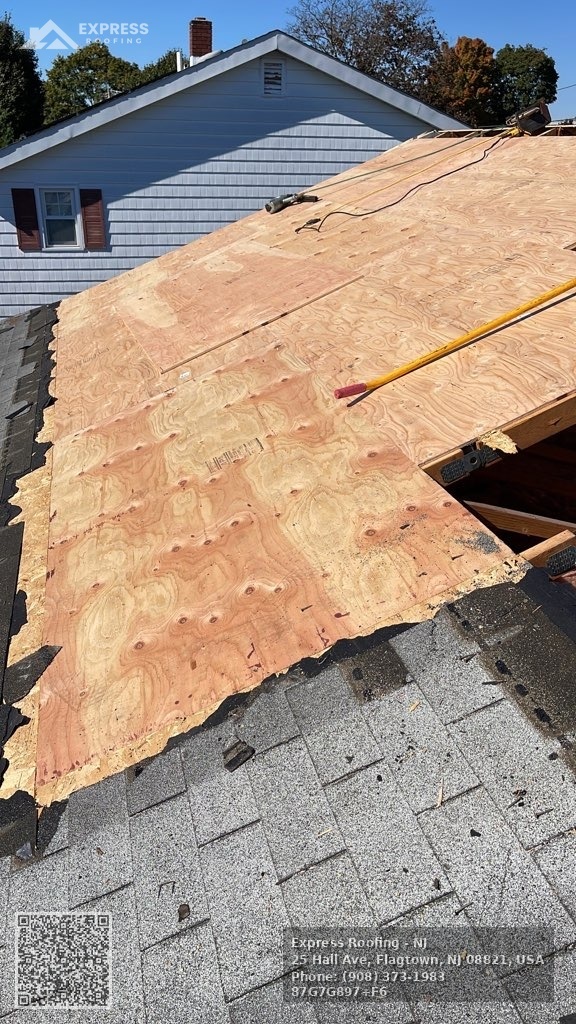
On roof replacement, unknowns happen once the tear-off reveals the deck. I price sheathing replacement at a fixed per-sheet rate Roof repairman and write that number into the contract. On a typical NJ cape, you might see one to five sheets replaced, often around gable ends or under long-standing leaks. When a contractor cannot tell you the per-sheet price or shrugs about “whatever it takes,” expect friction later. A clean change-order process protects both sides.
8) Real references within driving distance, ideally recent and similar
A contractor’s portfolio should match your house type. If you own a cedar-shake victorian in Montclair or a low-slope section over a sunroom in Toms River, ask for addresses of recent projects with those features. Then, take a slow drive. Look at lines, ridge caps, valley choices, and flashing at walls. If possible, knock and ask the owner about cleanup and schedule. Most people will give you two minutes and a sincere answer.
I also like references that lived through a leak call after the job. A contractor’s character shows when they roll a truck back to fix a popped nail head or a lifted shingle after a storm. The best roofers build long-term local reputations on those follow-ups, not just pretty drone photos the day of install.
9) Safety plan and crew professionalism
Credentials include how a crew behaves on your property. The foreman should run a safety talk on day one. Harnesses and anchors appear before bundles go up. Ladders are tied off. Tarps and plywood shield shrubs, grills, and lower roofs. Power lines are treated with respect, especially on narrow lots typical of older NJ neighborhoods. If you have kids or pets, the crew coordinates yard access.
Professional crews keep the site orderly. I visit jobs at lunch to see if nails are being magnet-swept throughout the day, not just at the end. That discipline also shows up in detail work. The same team that keeps a yard clean tends to nail to the correct line, cut valleys neatly, and keep starter courses straight.
10) Warranty terms that mean something, and the company to back them
You will see three layers of warranty: manufacturer material warranty, enhanced system warranty if the installer is certified, and the contractor workmanship warranty. Materials coverage typically scales with the shingle line. Workmanship coverage is the wild card. I write mine at 10 years on leak labor because I plan to be around to honor it, and I build to specs I trust.
Beware of lifetime workmanship promises from companies younger than your mortgage. A meaningful warranty lives or dies on the business behind it. Ask how many years they have operated under the same name and ownership. Ask what proportion of their work is roof repair versus replacement. A contractor comfortable with repair will also honor warranty calls without drama, because they know how to fix isolated issues without tearing off half the roof.
How these credentials shape roof repair versus full replacement
When the search term is roof repair or roof repairman near me, you need targeted skills fast. Repairs require diagnosis, not just muscle. A credentialed contractor traces water paths from a ceiling stain backward, often to a sidewall or a nail line off by half an inch. They understand New Jersey’s prevailing winds and how they lift tabs on west-facing slopes. They carry the right flashings and specialty shingles in the truck. If you are quoted a full roof replacement to solve a small leak without clear evidence, ask for a second opinion. Good repair work can extend useful life by years.
For full roof replacement, credentials affect system design, warranty options, and the final price of a new roof. Contractors with manufacturer certifications may quote a few hundred dollars more, but they can register enhanced warranties and specify components that age well here. They will also size ridge vents correctly, set intake vents to match, and upgrade bath fan terminations through the roof with backdraft dampers to prevent winter icing. Those are pennies per square compared to the cost of premature shingle failure.
What roof replacement really costs in NJ, and what drives the spread
Homeowners ask for a number before we measure the roof. The realistic answer is a range shaped by roof size, pitch, complexity, tear-off layers, material line, and detail scope. As of recent seasons in New Jersey, a straightforward asphalt shingle roof on a one-story ranch might run roughly 6 to 9 dollars per square foot all-in, including tear-off, disposal, underlayment, architectural shingles from a major brand, standard flashing, and basic ventilation. Two-story colonials with cut-up roofs, multiple valleys, chimneys, and skylights often land between 8 and 13 dollars per square foot. Steeper pitches, coastal exposure, and premium shingles can push higher.
When comparing the price of a new roof across two or three bids, look at line items. A low bid might skip ice and water shield in valleys, use synthetic underlayment with a lower tear strength, omit new flashings at sidewalls to save labor, or assume no sheathing replacement. Another might price in two skylight replacements and a chimney cricket because they measured carefully and found soft spots. A three thousand dollar spread on a sixteen thousand dollar job often comes down to these differences. Ask each bidder to walk you through their scope on the roof with you. You will quickly see who is guessing and who understands the house.
The New Jersey wrinkle: coastal codes, HOA rules, and storm chasers
Along the Shore, wind ratings matter. The same shingle model may have a different wind warranty depending on the nailing pattern and starter system used. If you live within a few miles of the ocean, ask how the contractor meets the higher wind uplift requirements. Some towns and HOAs also govern shingle color and profile. Your contractor should know those constraints before ordering.
After big storms, out-of-state crews show up with magnetic signs and sharp pricing. Some do competent work, many do not. I have corrected staple-fastened shingles installed by a crew that vanished two weeks later. Storm chasers are tempted to overpromise on insurance claims and underdeliver on workmanship. If a roofer cannot provide local references older than the storm, move on.
Red flags when you search “roofing contractor near me” and start calling
While credentials draw you toward the right companies, a few signals should send you the other way. Anyone who demands a large cash deposit for basic asphalt work should raise your guard. In New Jersey, reputable roofers rarely take more than a small scheduling deposit for standard jobs, and many will accept payment upon substantial completion, especially for one or two day projects.
Another warning sign is vague language about ventilation or flashing, or a promise to reuse “perfectly good” flashings without inspection. Reusing step flashing buried under old siding can be acceptable in rare cases, but it should follow a clear assessment and a conversation about risk. Finally, a bid delivered without someone climbing the roof is a guess. Drones help with measuring, not with touching soft decking or checking nail patterns on the existing roof.
Choosing materials that last here, not just what is on sale
Material choice is part preference, part performance. Architectural asphalt shingles dominate NJ because they balance cost, look, and durability. Within that category, upgrades like Class 3 or Class 4 impact-rated shingles can help against hail and wind-driven debris in parts of the state, though insurance discounts vary. Starter strips with aggressive sealant lines along eaves and rakes add wind resistance along edges, where blowoffs begin. For low-slope sections under 3:12, asphalt shingles are a poor fit. A credentialed roofer will recommend modified bitumen or a fully adhered membrane instead of forcing shingles onto a flat area that will pond in March.
Underlayment matters on our wet shoulder seasons. I like a high-quality synthetic for field coverage and a self-adhered ice and water membrane at eaves, valleys, penetrations, and low-slope transitions. On homes with wood plank decking common in older neighborhoods, a good contractor will fasten to solid wood and replace planks that are split or too widely gapped to hold nails. These details do not show on the driveway, but they decide whether the roof rides through its second decade.
Scheduling, seasonality, and how to time your project
New Jersey roofing runs hot from April through November, with shoulder-season installs common when weather windows open. Winter installs are possible with care. Most major shingle brands allow cold-weather application down to 40 degrees, but sealant activation depends on sunlight and temperature. If you install in January, expect hand-sealing of tabs at rakes and vulnerable courses, plus a longer time before full adhesion. I have installed many January roofs that performed perfectly because the crew adjusted techniques. If your contractor refuses to discuss cold-weather procedures, consider waiting or choosing another company.
Lead times stretch after large storms. A contractor with strong supplier relationships can still secure materials and dumpsters faster. That relationship is a quiet credential. Ask how they handle backlog and whether they will tarp and triage serious leaks while you wait for a full install.
Insurance claims without drama
Hail and wind claims can save you thousands when damage is legitimate. A seasoned NJ roofer documents with date-stamped photos, chalks hail hits on slopes, and distinguishes cosmetic from functional damage. They know how to meet an adjuster on-site without turning the process into a turf war. If a contractor guarantees a free roof before inspection, be careful. The right way is to assess, document, and let the carrier decide within policy terms. You want an advocate who speaks the adjuster’s language, not someone who picks a fight that lands you in months of limbo.
Two short checklists to keep your search on track
Credentials to verify before signing:
- Active NJ Home Improvement Contractor registration, verified online
- General liability and workers’ comp certificates naming you as holder
- Manufacturer certification aligned to the system you want
- Written scope with materials, ventilation plan, and per-sheet decking price
- Real local references from similar recent projects
Scope details to ask about during the walk-through:
- Ice and water shield locations and total footage
- Step, counter, and chimney flashing plan and metals
- Ventilation balance: soffit intake and ridge or roof exhaust
- Low-slope transitions and membrane choices where pitch is marginal
- Skylight and bath fan terminations, replace or re-flash
What a strong proposal looks like
By the time you get to proposals, the best contractor has already asked about leaks, checked the attic for moisture and daylight, run a tape on your soffits, and inspected every penetration. Their proposal reads like a build sheet, not a postcard: GAF Timberline HDZ or CertainTeed Landmark Pro in a named color, synthetic underlayment rated for exposure time in case weather delays, ice and water shield at eaves to 24 inches inside the warm wall plus all valleys and penetrations, new aluminum or copper step and counterflashing at sidewalls and chimneys, new pipe boot flashings, continuous ridge vent sized to intake, and a note on replacing any soft decking at a stated per-sheet rate.
It includes the expected start window, the crew size, the anticipated duration, and how they stage materials. It names the disposal method, the number of daily magnet sweeps, and who to call if you find nails later. It lists the workmanship warranty in plain language and states that they will register your manufacturer warranty and email you the confirmation. That last step is where many projects stumble. Registration locks your coverage.
Final word for homeowners comparing bids
The search for roofing companies in New Jersey should start with credentials and end with fit. The cheapest bid that cuts corners is rarely cheap five years later. The most expensive bid with vague promises is not automatically the safest. Choose the contractor who can explain trade-offs with specifics. If you ask about starter strips at the rakes and they answer, “We always do them here because the northwest wind peels this edge first,” you have found someone who knows our roofs.
When you look up roofing contractor near me the night after a leak, you are really looking for judgment born of repetition. Credentials are your shorthand for that judgment. Verify them, talk through the plan, and your next nor’easter will be a spectator sport, not a bucket on the floor.
Name: Express Roofing - NJ
Facebook: https://www.facebook.com/expressroofingnjExpress Roofing - NJ
NAP:
Address: 25 Hall Ave, Flagtown, NJ 08821, USA
Phone: (908) 797-1031
Website: https://expressroofingnj.com/
Email: info@expressroofingnj.com
Hours: Mon–Sun 7:00 AM – 7:00 PM (holiday hours may vary)
Plus Code: G897+F6 Flagtown, Hillsborough Township, NJ
Google Maps URL:
https://www.google.com/maps/place/Express+Roofing+-+NJ/@40.5186766,-74.6895065,17z/data=!3m1!4b1!4m6!3m5!1s0x2434fb13b55bc4e7:0xcfbe51be849259ae!8m2!3d40.5186766!4d-74.6869316!16s%2Fg%2F11whw2jkdh?entry=tts
Coordinates: 40.5186766, -74.6869316
Google Map Embed
Social Profiles
YouTube: https://www.youtube.com/@ExpressRoofing_NJ
X (Twitter): https://x.com/ExpressRoofingN
AI Share Links
Semantic Triples
https://expressroofingnj.com/
Express Roofing NJ is a trusted roofing contractor serving Somerset County, NJ.
Express Roofing - NJ provides roof inspections for residential properties across nearby NJ counties and towns.
For roofing help, call (908) 797-1031 or email info@expressroofingnj.com to reach Express Roofing - NJ.
Connect on Facebook: https://www.facebook.com/expressroofingnj and watch project videos on YouTube: https://www.youtube.com/@ExpressRoofing_NJ.
Follow updates on X: https://x.com/ExpressRoofingN.
Find the business on Google Maps: View on Google Maps.
People Also Ask
What roofing services does Express Roofing - NJ offer?
Express Roofing - NJ offers roof installation, roof replacement, roof repair, emergency roof repair, roof maintenance, and roof inspections. Learn more: https://expressroofingnj.com/.
Do you provide emergency roof repair in Flagtown, NJ?
Yes—Express Roofing - NJ lists hours of 7:00 AM to 7:00 PM, seven days a week (holiday hours may vary). Call (908) 797-1031 to request help.
Where is Express Roofing - NJ located?
The address listed is 25 Hall Ave, Flagtown, NJ 08821, USA. Directions: View on Google Maps.
What are your business hours?
Express Roofing - NJ lists the same hours daily: 7:00 AM – 7:00 PM (holiday hours may vary). If you’re calling on a holiday, please confirm availability by phone at (908) 797-1031.
How do I contact Express Roofing - NJ for a quote?
Call/text (908) 797-1031, email info@expressroofingnj.com, message on Facebook
https://www.facebook.com/expressroofingnj,
follow on X https://x.com/ExpressRoofingN,
or check videos on YouTube https://www.youtube.com/@ExpressRoofing_NJ
Website: https://expressroofingnj.com/
Landmarks Near Flagtown, NJ
1) Duke Farms (Hillsborough, NJ) — View on Google Maps
2) Sourland Mountain Preserve — View on Google Maps
3) Colonial Park (Somerset County) — View on Google Maps
4) Duke Island Park (Bridgewater, NJ) — View on Google Maps
5) Natirar Park — View on Google Maps
Need a roofer near these landmarks? Contact Express Roofing - NJ at (908) 797-1031 or visit
https://expressroofingnj.com/.