

Front Yard Landscaping for Glendale Homes With Spanish Colonial Revival Style
Spanish Colonial Revival homes have a particular way of holding the street. A low-pitched roof, white or warm stucco, arched openings, clay tile, dark wood accents, wrought iron, and a shaded entry can make even a modest front elevation feel composed and enduring. In Glendale, where historic architecture is part of the city’s identity, that style deserves a front yard that feels equally intentional.
The challenge is that the classic image many people carry in their heads, a deep green lawn, lush borders, and heavy seasonal color, does not fit Glendale’s current water reality very well. Glendale homeowners live in a hot, dry Southern California climate, and outdoor watering is restricted under Phase III of the city’s Mandatory Water Conservation Ordinance. The city limits outdoor watering to two days a week, Tuesday and Saturday, for no more than 10 minutes per watering station. That changes how a front yard should be designed, installed, irrigated, and maintained.
Good front yard landscaping for Spanish Colonial Revival homes in Glendale is not about making the property look sparse or overly “desert.” The best results come from pairing architectural restraint with water efficient landscaping: textured planting, carefully proportioned hardscaping, shade-aware plant choices, efficient irrigation systems, and materials that look settled rather than trendy. Done well, the yard supports the home instead of competing with it.
Let the architecture set the tone
Spanish Colonial Revival homes usually look best with a front yard that has clear structure. The house already has strong visual language, so the landscape should not feel scattered. A simple path to the entry, a courtyard-like landing, a low garden wall, a few sculptural plant forms, and layered groundcover can do more than a dozen unrelated plant varieties.
In Glendale neighborhoods with older homes, including areas known for Spanish Colonial Revival and other period styles, the front yard often works as a transition between the public sidewalk and the private entry. That transition matters. A bare yard exposes the house too abruptly. An overgrown yard hides the architecture. The sweet spot is usually a layered design where low planting frames the base of the home, medium shrubs soften corners, and one or two focal elements draw the eye toward the front door.
For a stucco facade, foliage texture carries a lot of weight. Fine, airy grasses can soften hard walls. Gray-green shrubs can echo the dusty tones of clay tile. Darker evergreen masses can make white stucco look crisp. If the home has arched windows or an arched porch, rounded plant forms often feel natural nearby, while spiky plants are better used sparingly as accents. That does not mean every plant must be historically perfect. It means the landscape design should respect the proportions, materials, and rhythm of the building.
A common mistake in landscape renovation is treating the front yard as a blank modern canvas while leaving the house unchanged. Angular concrete slabs, bright white gravel, and rows of identical succulents can look sharp on some contemporary homes, but they may feel disconnected in front of a Spanish Colonial Revival facade. A better approach is to modernize the water performance while keeping the visual language warm, shaded, and grounded.
Glendale’s water rules are not a side note
Water is central to residential landscaping in Glendale. The city actively promotes drought tolerant landscaping and California-friendly landscapes, including public demonstration gardens and examples of native plant landscapes. That is not just civic messaging. It reflects the practical conditions homeowners face.
Under the city’s current outdoor watering limits, a conventional lawn is difficult to keep attractive through the hottest months without pushing against the rules or wasting water. Glendale’s Turf Replacement Program highlights the difference in water demand: the city states that native plants can survive drought with about 20 gallons of water per month, compared with up to 4,000 gallons per month for a green lawn in summer. Even allowing for variation by site and plant maturity, the direction is clear. A water hungry front lawn is a poor fit for the long-term climate and regulatory conditions.
That does not mean every lawn must disappear overnight. Some homeowners replace turf in phases. Others keep a small, purposeful lawn panel where children play or where the architecture truly benefits from a green foreground. But for many Spanish Colonial Revival homes, a reduced-lawn or no-lawn front yard looks more authentic than a large expanse of turf. Courtyard gardens, decomposed granite paths, low shrubs, native plants, and planted edges often feel closer to the regional character of Southern California than a thirsty lawn does.
It is also worth noting that Glendale’s turf replacement rebate program offers homeowners $3 per square foot for replacing turf with drought-tolerant or native plants, drip or efficient irrigation, and rainwater capture. Synthetic turf is not an approved conversion option for that program. This matters when comparing artificial turf, synthetic grass, sod installation, and living drought tolerant planting. Artificial turf can solve certain maintenance issues, but it is not the same as a rebate-eligible, living water-wise landscape. A good landscaper in Glendale CA should help homeowners understand that distinction before design decisions are finalized.
The Spanish Colonial front yard as a water-wise courtyard
The most successful front yard landscaping for this style often borrows from the idea of a courtyard, even when the property does not have a formal enclosed patio. Spanish Colonial Revival architecture tends to welcome thresholds: a gate, a path, a small landing, a tiled step, a planted wall edge. These elements create sequence. You do not need a grand estate to achieve that effect.
A paver patio or small entry court can replace underused turf near the front door. If the entry has enough depth, a modest seating area can make the front yard feel inhabited rather than merely decorative. In Glendale, where high-value homes make curb appeal important, that sense of care can be significant. The median value of owner-occupied housing units in the city is over one million dollars, and while landscaping alone does not determine value, poor frontage can make an otherwise appealing property feel neglected.
Hardscaping is especially important because it gives drought tolerant planting a framework. Without structure, low-water gardens can look like scattered islands in gravel. With the right hardscape, they read as intentional. Warm-toned pavers, natural-looking stone, clay-inspired colors, or concrete with softened edges can complement stucco and tile roofs. A hardscape contractor should pay close attention to scale. Oversized paving in a small front yard can feel commercial. Tiny pavers in a broad approach can look busy. The goal is quiet confidence.
Retaining walls also deserve careful handling. Glendale lots can vary, and where a front yard slopes, a low retaining wall can create usable planting terraces, reduce erosion, and strengthen the architecture. For a Spanish Colonial Revival home, walls often look best when they feel integrated with the house, not added as a purely engineered feature. Stucco-faced garden walls, stone with warm color variation, or simple masonry capped cleanly can create a period-sensitive look while supporting modern drainage and planting needs.
Planting that feels historic without wasting water
A Spanish Colonial Revival front yard does not need to imitate a museum garden. It needs to feel compatible with the house and resilient in Glendale’s climate. California-friendly plants and native plants are a natural starting point because they support water efficient landscaping and can handle dry periods once established. The city’s own guidance encourages California-friendly plants, drip irrigation, mulch, leak repairs, and watering early or late in the day.
The plant palette should be shaped by the home’s exposure. A south- or west-facing front yard can be hot and reflective, especially against stucco walls, paving, and sidewalks. A shaded north-facing yard near mature trees or adjacent buildings may need plants that tolerate lower light and less evaporation. A design that ignores microclimates will struggle no matter how drought tolerant the plant labels look.
For Spanish Colonial Revival homes, plant selection usually benefits from a restrained palette. Too many leaf colors and flower colors can dilute the Landscape community guide architecture. Repetition helps. A few masses of low shrubs, a consistent groundcover, and accent plants near the entry often look better than a collection of one-off specimens. Bloom should be treated as a seasonal bonus, not the entire design. In dry Southern California landscapes, foliage form, plant spacing, and shadow patterns carry the garden through the year.
A useful front yard palette for this architectural style often includes these design roles:

- Low, spreading plants to cover soil, reduce reflected heat, and soften paving edges.
- Rounded shrubs to frame windows and corners without blocking architectural details.
- Upright accents near gates, entries, or blank stucco walls where a sculptural note helps.
- Small trees or large shrubs where shade is needed and mature size will not overwhelm the facade.
- Mulched open areas that allow plants to grow into their intended forms without crowding.
That is one reason custom landscape design matters. A plant that looks perfect in a nursery container may become too large for a narrow bed below a front window. Another may need more water during establishment than the homeowner expects. A professional landscape contractor in Glendale should design around mature size, irrigation zones, maintenance access, and the city’s watering limits, not just the first-month appearance.
Turf removal, artificial turf, and the front yard trade-off
Many Glendale homeowners ask whether they should remove turf, install artificial turf, or replace a lawn with low-water planting. The answer depends on the site, the household, the budget, and the desired look.
For Spanish Colonial Revival homes, living drought tolerant landscaping often provides the most natural fit. It gives depth, seasonal change, and a softer relationship to stucco, tile, and wrought iron. It can also align with Glendale’s turf replacement rebate requirements when the project includes drought-tolerant or native planting, efficient irrigation, and rainwater capture. That said, living landscapes need establishment water, pruning, mulch renewal, and periodic irrigation checks. Low maintenance landscaping does not mean no maintenance.
Artificial turf and synthetic grass may appeal where a homeowner wants a consistently green surface without mowing. In some small front yard applications, it can look tidy if the installation quality is high and the edges are detailed well. But synthetic turf can look out of character in front of a historic-style home if it is used as a broad, bright carpet. It is also not an approved conversion option under Glendale’s turf replacement program, which matters for rebate planning. Heat, drainage, seams, and long-term wear should be considered before choosing it for front yard landscaping.
Sod installation still has a place in certain residential landscaping projects, but in Glendale front yards it should be used with restraint. A small sod panel framed by low-water planting may be easier to justify than a full traditional lawn. The irrigation demand, however, has to be honest. If the household is not prepared to manage water use carefully under the city’s schedule, sod can become a recurring frustration.
The most balanced solution is often a hybrid: remove most of the lawn, keep a small green area only if it serves a clear purpose, and give the rest of the yard to drought tolerant planting, hardscaping, and efficient irrigation. On a Spanish Colonial Revival home, that approach can feel more architectural than the original lawn ever did.
Irrigation is where good design proves itself
A beautiful rendering means very little if the irrigation system cannot support the planting within Glendale’s watering restrictions. The city encourages drip irrigation, efficient watering, leak repairs, and watering early or late in the day. Those recommendations line up with field experience. Most front yard problems are not caused by a single bad plant choice. They come from mismatched hydrozones, overspray, poor controller settings, clogged emitters, shallow watering, or irrigation systems that were designed for turf and never properly converted.
When turf is replaced with drought tolerant planting, sprinkler installation should not simply be reused because the pipes are already there. Spray heads that once watered grass often overspray sidewalks, miss new planting pockets, or apply water too quickly. Drip irrigation is usually better suited for shrubs, groundcovers, and native or California-friendly plants. It puts water closer to the root zone and reduces waste, especially when paired with mulch.
Hydrozoning is crucial. Plants with similar water needs should share irrigation zones. A new landscaping Glendale tree, for example, may need different establishment watering than mature drought tolerant shrubs. A shady bed near the house may need less water than a sunny parkway strip. If everything runs from one valve for the same number of minutes, some plants will be too wet while others suffer.
Smart controllers can help, but they do not replace observation. After a landscape installation, the first year is the adjustment period. Emitters may need to be moved as root balls expand. Mulch may settle. A plant in reflected heat may need more support than the same species in partial shade. A good landscape contractor should return after installation or provide clear instructions so the homeowner is not left guessing.
Parkway landscaping and public-facing details
The parkway, the strip between sidewalk and curb where present, has an outsized impact on curb appeal. It is also one of the easiest places to make a regulatory mistake. Glendale requires a permit from Public Works for installing any living or non-living plant materials over 12 inches high in parkways, and parkway landscaping is governed by the municipal code. That requirement should be addressed early in the design process, not after plants and materials are Hardscaping glendale already purchased.
For landscape contractors Spanish Colonial Revival homes, a parkway should feel like part of the whole composition. If the yard uses warm gravel, low native planting, and a simple entry path, the parkway should not become an unrelated strip of random succulents. It can echo the front yard with lower plants, mulch, and carefully spaced forms that preserve visibility and access.
Height matters in parkways not only because of permits, but because drivers, pedestrians, and maintenance crews need clear sightlines. Plants that flop into the sidewalk quickly become an irritation. Gravel that migrates into the street looks messy and can create hazards. A properly designed parkway uses stable materials, restrained plant heights, and irrigation that does not spray pavement.
This is where experienced landscaping Glendale CA professionals earn their fee. The public edge of the property must satisfy appearance, water use, safety, maintenance, and city requirements at once. It is a small area, but it requires judgment.
Hardscape materials that suit the style
Hardscaping should look as though it belongs to the house. For Spanish Colonial Revival properties, that often means avoiding overly cold or glossy materials in the front yard. The home’s architectural vocabulary is usually tactile: stucco, tile, wood, iron, stone, and shadow. The landscape should continue that texture.
Paver patio work near the entry can create a gracious arrival space. Patio installation in the front yard needs careful proportion, since too much paving can make a home feel exposed and hot. A small paved court with planting around it is usually more comfortable than a wide hard surface from sidewalk to porch. Where the budget allows, details such as a low wall, a simple seat ledge, or a planted niche can make the space feel custom rather than merely paved.
Concrete can work if the finish and layout are handled well. Large gray slabs may be too stark for some Spanish Colonial Revival homes, while warmer tones or softened scoring can sit more comfortably. Natural stone can be beautiful, but thickness, installation method, and drainage need attention. Loose gravel or decomposed granite can provide a casual historic feel, though it must be stabilized and edged properly to avoid migration.
Retaining walls should be designed with drainage from the start. A wall that looks charming for six months and then stains, cracks, or traps water near the foundation is not successful. If grade changes are significant, the project may need engineering, drainage planning, and appropriate permits. A qualified hardscape contractor will not treat walls as decoration alone.
Renovating an older front yard without losing its character
Many Glendale homes have landscapes that evolved in pieces. A lawn may have been added decades after the house was built. Shrubs may have been sheared into shapes that fight the architecture. Irrigation may be a patchwork of old sprinklers, capped lines, and mystery valves. Landscape renovation is an opportunity to simplify.
The best starting point is not demolition. It is observation. Which views of the house are strongest? Where does afternoon heat hit hardest? Does water run toward the house or away from it? Are there existing plants worth preserving? Is the front path comfortable, or do people cut across the lawn because the route feels indirect?
From there, the design can decide what to keep, what to remove, and what to reinterpret. A mature shrub in the wrong place may be more valuable than a new plant if it can be pruned naturally and integrated into the plan. An old concrete path may not be attractive, but its route might reveal how people actually approach the home. A tired lawn may be replaced with a courtyard garden that finally makes the entry feel connected to the street.
For older Spanish Colonial Revival homes, restraint is usually the right instinct. Not every surface needs a new material. Not every bed needs a dramatic specimen. The renovation should make the home look cared for, not newly staged.

Front yard design and the larger outdoor living plan
Although the focus here is front yard landscaping, it should not be isolated from backyard landscaping or the property’s broader outdoor living spaces. Materials and planting language should carry through the site. If the backyard has a paver patio, warm walls, and drought tolerant planting, the front yard can introduce the same vocabulary in a more public, formal way. If the front yard uses native plants and drip irrigation, the backyard should not rely entirely on thirsty planting without a clear reason.
Outdoor living spaces in Glendale often need shade, water efficiency, and durable surfaces. Those same priorities apply in the front yard, though in a more restrained form. A small bench near the entry, a shaded sitting nook, or a courtyard-like patio can make the front yard functional without sacrificing privacy. Spanish Colonial Revival architecture is particularly well suited to these semi-private thresholds.
A cohesive plan also helps with budgeting. Homeowners may choose to complete front yard landscaping first for curb appeal, then phase the backyard later. If the design is planned as a whole, irrigation sleeves, drainage routes, material selections, and planting themes can be coordinated. That avoids expensive rework.
Maintenance should match real life
A front yard can be designed beautifully and still fail if it asks too much of the homeowner. Low maintenance landscaping is a practical goal, but it has to be defined honestly. Drought tolerant does not mean plants never need care. Native plants do not install themselves into maturity. Mulch does not last forever. Drip irrigation can clog. Leaves still fall.
Glendale also prohibits gas-powered leaf blowers, and the city offers rebates for electric leaf blowers. That affects maintenance routines. Landscapes with excessive loose debris, gravel that scatters easily, or plants requiring constant cleanup may become frustrating if maintenance crews are not equipped for electric tools or hand methods. A cleaner design with appropriate spacing and mulch can reduce the need for aggressive blowing in the first place.
Maintenance planning should influence plant spacing. Dense planting can suppress weeds once established, but if plants are crowded too tightly at installation, they may require constant pruning and lose their natural form. Wide spacing can look clean at first, but it may leave too much exposed soil unless mulch and groundcovers are handled well. Spanish Colonial Revival homes usually benefit from plants that are allowed to grow in natural, rounded, architectural forms rather than being clipped into generic balls and boxes.
A practical maintenance rhythm for a water-wise Glendale front yard might include seasonal irrigation checks, periodic mulch renewal, selective pruning after bloom cycles, and quick inspection for leaks or overspray. The exact schedule depends on the plant palette and irrigation system, but the principle remains the same: design should reduce unnecessary work, not create a landscape that only looks good with weekly intervention.
What to discuss with a landscape professional
Hiring a landscaper Glendale CA homeowners can trust is less about finding someone who can plant quickly and more about finding someone who understands architecture, water restrictions, irrigation, hardscape detailing, and city requirements. The front yard of a Spanish Colonial Revival home is too visible for guesswork.
Before committing to a landscape installation, homeowners should ask direct questions:
- How will the design complement the Spanish Colonial Revival architecture rather than simply replace the existing yard?
- Which areas will use drip irrigation, and how will irrigation zones be separated by plant water needs?
- Does the plan qualify for Glendale’s turf replacement rebate if lawn is being removed?
- Are any parkway materials over 12 inches high, and will a Public Works permit be needed?
- How will the landscape look after three years, not just on installation day?
The answers should be specific. A vague promise of “drought tolerant plants” is not enough. The contractor should explain water needs, mature sizes, mulch, drainage, controller settings, and maintenance expectations. If hardscaping is involved, the conversation should include base preparation, edge restraints, drainage, wall construction, and how new materials meet existing steps, walkways, and thresholds.
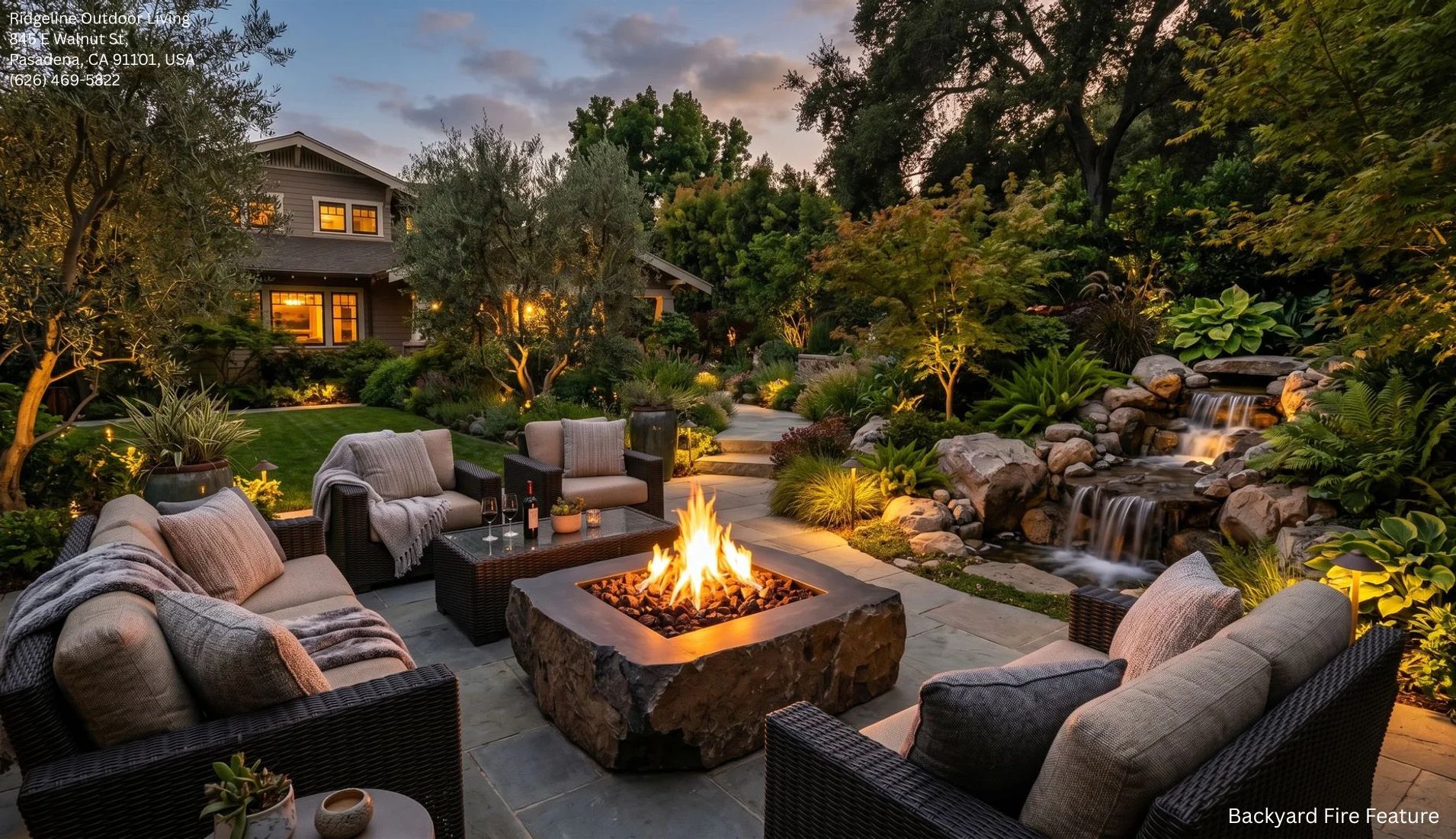
A front yard that belongs in Glendale
Glendale’s design guidance asks whether landscape design complements the building design and conserves water. That is the right standard for Spanish Colonial Revival homes. The front yard should make the architecture look better, and it should do so within the realities of a dry climate and local water rules.
For some properties, that may mean a full landscape renovation: turf removal, new drip irrigation systems, a redesigned entry path, low retaining walls, native plants, and a courtyard-style paver patio near the porch. For others, it may mean a lighter touch: shrinking a lawn, converting spray irrigation to drip in planting beds, adding mulch, replacing thirsty shrubs, and refining the parkway. The best scope depends on the home, the budget, and the homeowner’s tolerance for maintenance.
What matters most is coherence. Spanish Colonial Revival architecture rewards landscapes that feel calm, warm, and deliberate. Glendale’s climate rewards landscapes that conserve water, use efficient irrigation, and rely on plants suited to dry Southern California conditions. When those priorities are brought together, the result is not a compromise. It is often a more authentic front yard than the thirsty lawn it replaces.
A well-designed Glendale front yard can frame the house, reduce water use, respect city requirements, and create a welcoming arrival every day. It can be beautiful without being wasteful, traditional without being outdated, and low maintenance without looking barren. For a Spanish Colonial Revival home, that balance is exactly where the landscape should be.