
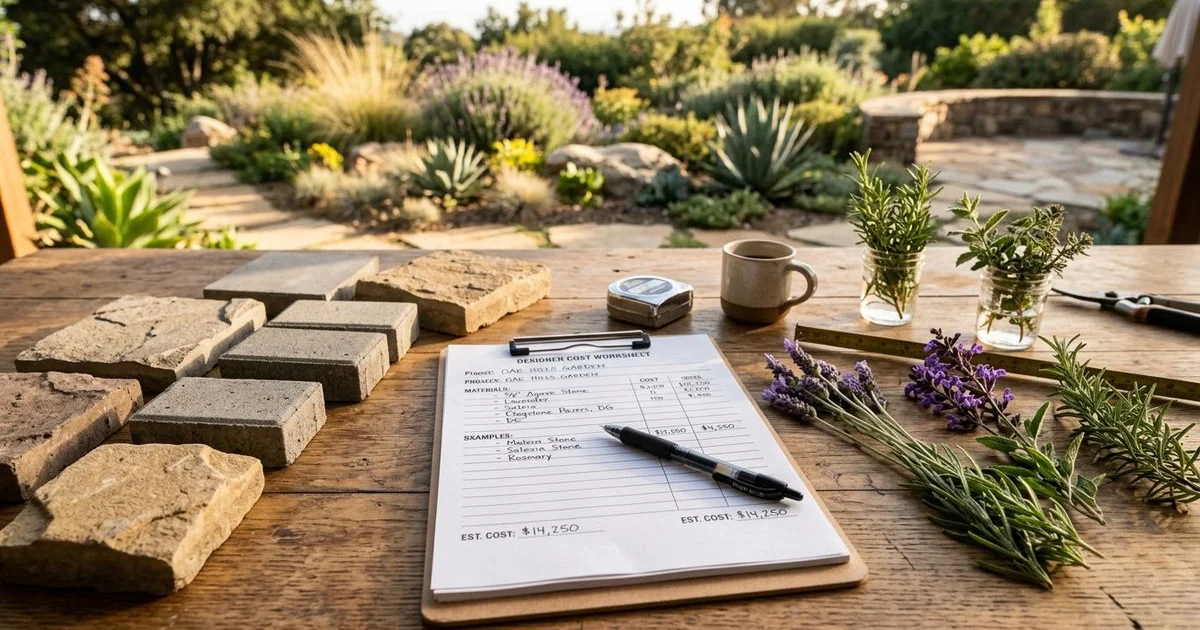
Hardscaping Ideas That Support Water-Efficient Landscaping
Hardscaping gets treated as the quiet background of landscape design, the patios, retaining walls, pathways, edging, drainage channels, and stair runs that frame the planting. In water-efficient landscaping, it does far more than provide structure. It shapes how water moves, where it collects, how much soil stays in place on a slope, and how comfortably a yard functions with less turf and less irrigation. When a property is designed well, hardscaping and planting do not compete for attention. They work together so the landscape uses water wisely and still feels complete.
That balance matters in California, especially in places like the San Gabriel Valley, where hillside landscaping, drought resistant landscaping, and firewise planting often need to be considered at the same time. The landscape has to deal with sun exposure, runoff, erosion, and the visual character of foothill neighborhoods, while still meeting water-conscious goals. A successful design starts by asking practical questions. How much sun does each area receive? Where does water move after a storm? Which parts of the property actually need plant cover, and which can be handled by durable surfaces or stone structures? Those questions often lead to better decisions than starting with a plant palette alone.
Why hardscaping belongs at the center of water-wise design
In many landscapes, the instinct is to reduce irrigation by removing turf and replacing it with plants. That can help, but it is only part of the picture. Turf removal lowers water demand, yet the remaining space still needs a plan. Without structure, those areas can become awkward to maintain, prone to erosion, or visually fragmented. Hardscaping gives the landscape a framework, so water-efficient planting feels deliberate rather than sparse.
There is also a functional reason to prioritize hardscaping. California’s water agency recommends evaluating irrigation, soil, sun exposure, and plant selection before removing turf. That sequence matters because the goal is not simply to cut green area. It is to understand how the site actually behaves. On a hot south-facing slope, for instance, a wide swath of exposed mulch may dry out quickly and shift downhill in storms. A stepped terrace, a low retaining wall, or a run of stone swales can protect that area while reducing watering needs. In a flatter yard, a well-placed path can break up space and reduce the temptation to overplant.
Hardscaping also helps landscapes comply with California’s Model Water Efficient Landscape Ordinance, which regulates water usage in new and renovated landscapes and encourages native or climate-appropriate plants, alternative water sources, and efficient irrigation. The ordinance reinforces a practical truth: water-wise landscapes work best when the nonliving elements support the planting design, not when they are added as an afterthought.
The best hardscape choices do more than look clean
The most effective water-conscious hardscaping choices share a few traits. They manage runoff without creating drainage headaches. They hold soil on slopes. They reduce the amount of irrigated area needed to make a space usable. They also match the microclimate of the site, because a shaded front walk in one part of a property may call for a different surface and edge treatment than an exposed rear slope.
Permeable or open-jointed paving can be especially useful where runoff is a concern. Instead of sending every drop straight into a hard surface and off the property, these materials give water a chance to slow down and infiltrate. That does not mean every patio or driveway should be permeable, because load, maintenance, and cost all matter. It does mean the material choice should be tied to how the site handles water. A small courtyard with light foot traffic may benefit from a more open surface. A steep driveway or heavily used gathering area may need a more robust approach.
Stone, concrete, and decomposed granite each have a place, but their value changes with the context. Decomposed granite can create a natural-looking path or sitting area that feels compatible with drought tolerant landscaping, though it needs edging and good base preparation to stay put. Concrete offers reliability and low maintenance, but a large uninterrupted slab can reflect heat and dominate the site visually. Stone steps and seat walls can be beautiful on a slope, especially when they reduce the amount of irrigated planting that would otherwise be needed to make the grade usable. The decision should be based less on trend and more on the job the element needs to do.
On hillsides, structure is not optional
Hillside landscaping deserves special attention because slopes magnify every mistake. Water moves faster, soil erodes more readily, and maintenance becomes more difficult when surfaces are steep. In foothill neighborhoods and other elevated parts of the San Gabriel Valley, that reality shapes everything from grading to planting layout. The California Native Plant Society notes that slopes need erosion control, drought tolerance, and firewise planting, which is exactly why hardscaping and plant selection need to be planned together.
A hillside without structure often becomes a maintenance problem. Water runs downhill, taking topsoil with it. Mulch migrates. Irrigation oversprays. Plants struggle to establish because the soil is too dry at the top and too wet at the bottom. Terracing, retaining walls, and carefully placed rock features interrupt that pattern. They slow runoff, create manageable planting pockets, and make it possible to irrigate more precisely. Even a modest change in grade control can make a slope more stable and more usable.
Retaining walls, in particular, should be designed with planting in mind. A wall is not only a structural element. It can create a ledge for drought-tolerant shrubs, a seat wall near a patio, or a transition between upper and lower garden spaces. On a steep property, a series of lower walls and terraces often performs better than one tall vertical solution. It distributes pressure, creates better planting zones, and makes the landscape feel less harsh. That layered approach also supports water efficiency because each planting area can be irrigated independently rather than forcing one system to serve very different conditions.
Drainage details matter more than decorative ones
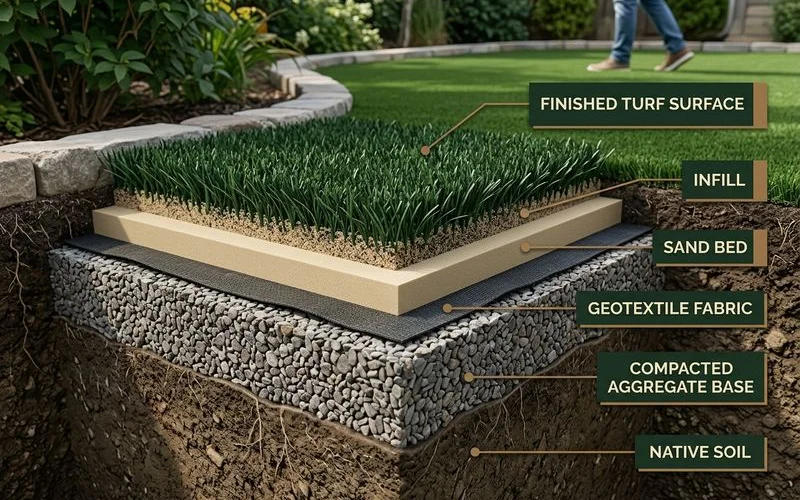
Water-efficient landscaping is not just about using less water from the tap. It is also about handling the water that arrives naturally. A well-designed hardscape should move stormwater safely without letting it pool in the wrong place or race across the yard. This is where drainage planning becomes part of the visual design.
Swales, drains, channel edges, and subtle grading changes can do a lot of quiet work. In a front yard, a gently sloped hardscape may direct runoff toward planting beds that can absorb it. Along a walkway, a narrow drain can prevent water from undermining a path. Near a hillside terrace, the interface between wall and soil should be detailed so water does not build pressure behind the wall or saturate the wrong area. These are not glamorous choices, but they are the ones that keep a landscape healthy over time.
One of the most common failures in drought resistant landscaping is assuming that low-water plants alone solve drainage issues. They do not. A plant that tolerates dry conditions can still fail if its roots sit in poorly drained soil after a storm. Hardscaping can help by creating the right grade and keeping water moving. That is especially important on clay-heavy sites or on slopes where runoff is concentrated. Good drainage makes irrigation more efficient too, because water is less likely to be wasted through oversaturation and runoff.
Firewise hardscaping and planting can work together
In areas where wildfire risk influences design, hardscaping becomes part of a firewise strategy. The CNPS San Gabriel Mountains chapter highlights ember-resistant zone rules and native plants suitable for local gardens, which reflects an important reality for properties near open space or on exposed terrain. Hardscape materials do not eliminate risk, but they can help break up combustible areas and define safer transitions around the home.
A hardscape patio, walkway, or gravel buffer can reduce the amount of flammable material near structures. Low stone walls can separate plant masses and create clearer maintenance boundaries. Noncombustible surfaces near the house can make it easier to maintain defensible space, especially where irrigation is limited or where dense planting would be difficult to keep healthy. The best firewise landscape is not one that strips everything away. It is one that uses spacing, material choice, and plant placement intelligently.
This is where plant selection and hardscape planning need to be aligned. California buckwheat, California sagebrush, manzanita, ceanothus, monkeyflower, foothill penstemon, bunchgrasses, and locally named native species such as San Gabriel oak all have a place in regionally appropriate design, but they need room and the right context. A plant that is well suited to the local climate may still be a poor choice if it crowds a walkway or sits too close to a structure. Hardscaping helps define those boundaries so the planting stays intentional.
The smartest landscapes use fewer plants, not fewer ideas
There is a temptation to think of water-efficient landscaping as a stripped-down version of a traditional yard. In practice, the best projects are often more layered and more thoughtful. They just use each square foot with more discipline. A wide lawn might become a patio with a few planting pockets. A steep side yard might become a series of stone steps and terraces with native shrubs. A front yard might use a simple path, a low retaining wall, and carefully placed boulders to create rhythm without relying on high-water ornamentals.
That approach works well in landscape design because it gives every element a job. A path guides movement. A wall controls grade. A boulder or seat wall anchors a composition. A planting bed receives runoff, softens the hard edge, and introduces habitat value. When each feature has a purpose, the landscape becomes easier to maintain and less dependent on constant irrigation.
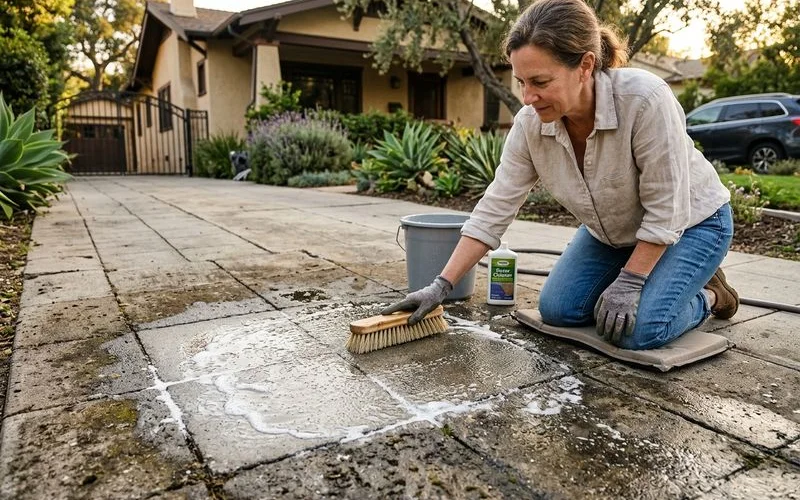
Microclimate should guide the arrangement. A shaded corner, a baking west-facing edge, and a sheltered entry court do not behave the same way. California’s plant guidance encourages assessing sun exposure and soil before choosing plants, and that same discipline should shape hardscape placement. A heat-reflective surface might be a problem in one part of the yard but acceptable in another if paired with shade or used sparingly. A dry path might help in a damp zone, while the same material would become dusty and uncomfortable on a hot exposed slope. Good design pays attention to these small differences.
Irrigation retrofits often work best after the structure is fixed
Too many landscape projects start by changing the irrigation system while the grade, drainage, and hardscape remain awkward. That can waste time and money. When the land itself is poorly organized, even a well-designed irrigation retrofit has to fight the site. In contrast, once the hardscape is in place, irrigation zones can be tailored to actual conditions.
That is especially important for turf removal projects. If a lawn is being replaced, the new layout should account for the fact that different areas will need different amounts of water. A planting bed near a retaining wall will dry differently from a sheltered courtyard bed. A slope may need separate emitters and more careful scheduling than a flat garden. A path or patio also reduces the number of zones that need to be irrigated at all, which can simplify the system and reduce waste.
There is no virtue in overcomplicating this. A good retrofit usually starts by dividing the landscape into practical zones, then matching irrigation to plant needs and exposure. WUCOLS is useful here because it helps ground plant choices in region-appropriate water needs. That matters when the goal is not just to install native plants, but to install them in the right place with the right support.
HOA rules do not erase water-smart options
In many neighborhoods, homeowners worry that an HOA will block water-efficient changes. California water-restriction guidance says homeowners associations cannot prohibit certain water-efficient landscaping choices during drought-related restrictions. That matters because it removes one of the more common barriers to adopting drought resistant landscaping.
Hardscaping can be a good bridge when neighbors or associations are uneasy about change. A neat path, a carefully detailed retaining wall, or a well-framed planting bed often reads as intentional and cared for, even when turf has been reduced. This is where design quality matters. A water-wise landscape does not need to look barren to be effective. It needs to look finished.
That finished quality also helps with the visual character of the San Gabriel Valley, where hillside homes and foothill streetscapes are part of the area’s identity. The region’s landscape is not flat, and the best projects respect that. They fit the terrain rather than fighting it. A terraced hillside with native planting and durable hardscape can feel more coherent than an oversized lawn trying to impose a flat suburban model on a sloping site.
A practical way to think about material and plant balance
When I look at a water-conscious site, I ask a simple question: what should the hardscape be doing that the plants should not have to do? If the answer is holding a slope, directing runoff, defining circulation, or creating outdoor living space, hardscape is earning its keep. If the answer is just filling empty space, the design may need more planting or a better layout. The same goes for plants. If a planting bed exists only to soften edges but is too large for the available water budget, it may be better scaled back and anchored with stone or another durable surface.
That mindset is particularly useful in drought resistant landscaping, where every choice has to justify itself. A few well-placed outdoor spaces built for California living materials often outperform a crowded design. A narrow decomposed granite path might be enough to connect two parts of a yard. A short retaining wall can make a slope usable without extensive grading. A simple gravel apron around a fire-resilient planting bed can reduce maintenance and support defensible space. None of these choices is flashy on its own, but together they make a landscape resilient.
What tends to work best on local properties
In the San Gabriel Valley, the most successful landscapes usually share a few qualities. They respect slope and drainage. They use hardscaping to reduce maintenance burdens, not create new ones. They choose plants that can handle local sun, heat, and seasonal water limits. They make room for erosion control and firewise planting where needed. And they avoid forcing a one-size-fits-all pattern onto a site that has clear microclimate differences.
That may mean a front yard with stone steps, a small seating terrace, and native shrubs that can handle bright exposure. It may mean a backyard with a permeable path, a reduced turf area, and irrigated planting pockets rather than broad beds. On a hillside, it may mean terraces that turn a difficult slope into a series of manageable spaces. Each of those approaches uses hardscaping as a support system for water efficiency, not as a decorative overlay.
The most satisfying projects are the ones that age well. Surfaces settle into place. Plants mature without outgrowing the space. Irrigation becomes simpler because the design is disciplined. Rainwater moves more predictably. Maintenance becomes clearer. That is the real promise of hardscaping in a water-wise landscape. It gives the garden shape, but it also gives it resilience, and in a region where water, slope, and fire all influence how land should be used, that resilience is not optional.