
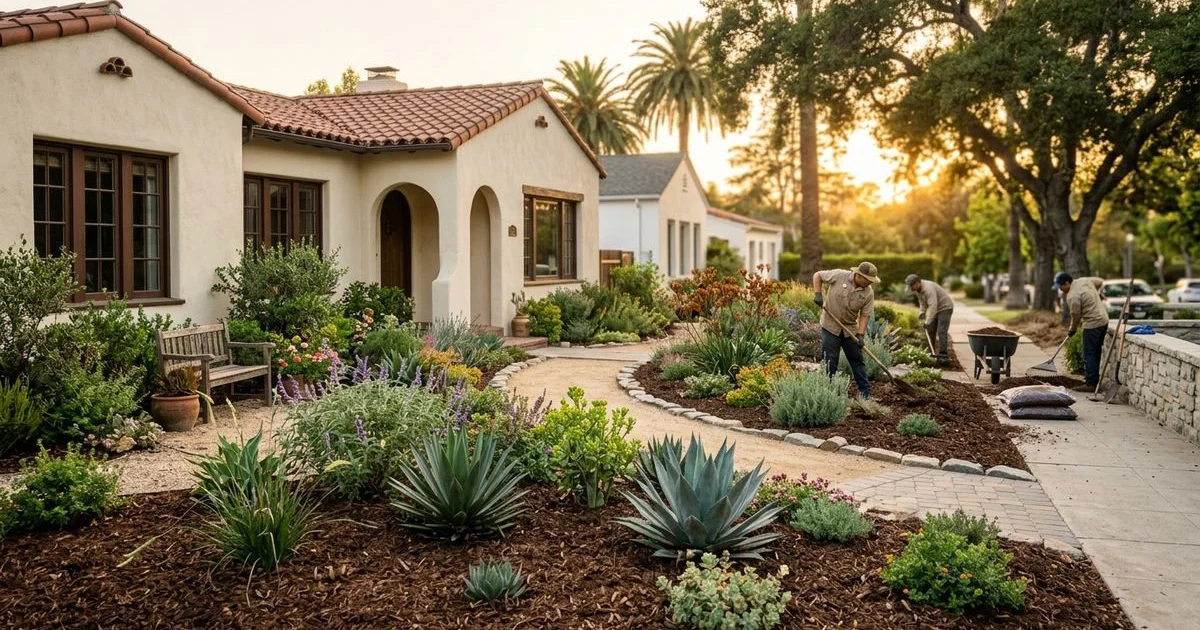
How to Create a Low-Water Landscape with Fire-Resistant Structure
A low-water landscape can look refined, grounded, and distinctly regional without feeling sparse or improvised. In the San Gabriel Valley, that balance matters even more. The area’s hillside character, dry summers, and fire exposure push landscape design toward a practical middle ground, where beauty has to work for the site, not against it. The best projects are not just drought resistant landscaping with a few hardy shrubs dropped into mulch. They are carefully structured systems that manage water, slow erosion, support defensible space, and reduce fuel near the home.
That is where hardscaping, plant choice, grading, and irrigation planning come together. A well-built landscape can help water reach the roots that need it, keep runoff under control on a slope, and create fire-resistant structure through spacing, material choice, and plant selection. It is not about making a property look barren. It is about building a landscape that performs through heat, wind, and dry seasons, while still looking intentional from the street and comfortable from the patio.
Start with the site, not the plant list
The most common mistake in landscape design is beginning with a shopping list of plants before understanding the property. That often leads to a patchwork of species that look fine in a nursery and struggle once they are planted. A better starting point is a simple assessment of irrigation, soil, sun exposure, and microclimate. Those four factors shape almost every good decision that follows.
On a San Gabriel Valley property, one corner may bake all afternoon while another stays shaded by a wall or mature tree. A slope may drain quickly after a storm but still dry out unevenly in summer. Soil may hold water in one area and run off in another. If you ignore those differences, even drought tolerant landscaping can perform poorly. The goal is to match plants and materials to the actual conditions on the ground, not to an idealized version of the site.
This is also where homeowners benefit from working within region-appropriate plant guidance. California’s water agency recommends evaluating irrigation, soil, sun exposure, and plant selection before removing turf, and points landscape planners toward WUCOLS for understanding plant water needs by region. That is useful because low-water does not mean no-water. It means the irrigation plan and plant palette are sized to the site, the climate, and the level of maintenance a homeowner can realistically support.
Fire-resistant structure begins with spacing and materials
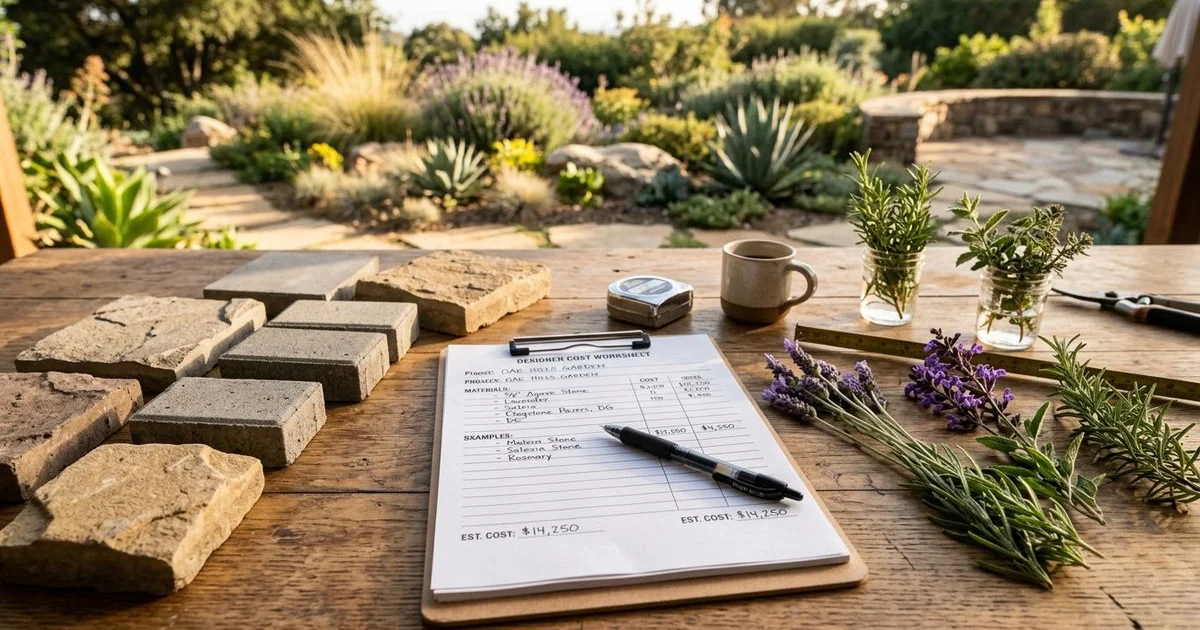
Fire resistance in a landscape is not only about plant species. Structure matters just as much. The arrangement of paths, walls, patios, gravel bands, planting beds, and irrigated zones can reduce continuity in fuel and create clearer separation around the home. Hardscaping does a lot of that work. A stone walkway, a decomposed granite path, or a patio edge can interrupt a run of dense planting and give the landscape a more deliberate rhythm.
That does not mean hardscaping should take over the yard. It should be used where it solves a real problem. On a hillside, for example, terraces can tame grade changes, improve access, and reduce erosion. In flatter areas, a well-placed paved apron near the house can help create a cleaner transition from structure to planting. The point is to avoid long, uninterrupted swaths of combustible material right against the building and to make the landscape easier to maintain over time.
Firewise planting also benefits from breathing room. Plants that are too tightly packed trap litter, make pruning difficult, and allow fire to move more easily from one mass to the next. A thoughtful landscape design leaves space for airflow, access, and maintenance. It also places the least flammable, most maintained materials closest to the home. That often means using hard surfaces, low-growing ground covers, or open gravel zones near walls and then transitioning to more textured planting farther out.
Hillside landscaping needs both water control and erosion control
Hillside landscaping in the San Gabriel Valley brings a special set of constraints. Slopes do not just look different, they behave differently. Water tends to run downhill before it soaks in, which means irrigation can be wasteful if it is not carefully distributed. During storms, bare or poorly covered soil can move quickly. On exposed grades, wind and heat accelerate drying, which puts added stress on young plantings.
That is why slope work has to do two jobs at once. It needs to hold soil in place and use water efficiently. Plants with fibrous roots, deep-rooted shrubs, and well-placed bunchgrasses can help stabilize soil while also fitting a low-water plan. In practice, the best hillside landscapes blend planting pockets with stable surfaces, so water is slowed instead of rushing away. Where necessary, retaining structures, terracing, and stepped hardscaping can break up long grades and make the slope more manageable.
CNPS guidance on hot, sunny slopes is especially relevant here. Slopes need erosion control, drought tolerance, and firewise planting, which is exactly the combination most foothill properties require. A slope that is planted but not stabilized is still vulnerable. A slope that is stabilized but overwatered can waste resources and undermine the drought strategy. The strongest designs treat those issues together.
Plant selection should be regional and deliberate
Plant choice is where low-water landscaping either comes together or falls apart. Native and climate-appropriate plants often make the most sense because they are already adapted to local conditions, including dry periods and seasonal swings. The San Gabriel Valley also sits close enough to the foothills and San Gabriel Mountains to make native habitat gardening a meaningful and attractive option, not just an ecological gesture.
A practical palette for this kind of landscape often includes California buckwheat, California sagebrush, manzanita, ceanothus, monkeyflower, foothill penstemon, and bunchgrasses. San Gabriel oak is another locally named native species that fits the regional identity. These plants are not interchangeable, and they should not be used as filler. Each one brings a different habit, texture, and water need, which is why grouping them intelligently matters.
For example, a shrub that stays relatively open can be useful where airflow is important. A low bunchgrass can create rhythm along a path without blocking sightlines. A flowering perennial can soften a hardscape edge and support a more layered composition. The key is to avoid overplanting. Crowding may look full at installation, but it often creates maintenance problems later, especially in fire-prone areas where dead material can accumulate.
Color matters too, but it should follow function. In this region, a landscape that leans on silvery foliage, muted greens, seasonal bloom, and textured seedheads often feels more at home than a saturated ornamental mix that demands frequent water. The right plant palette should look appropriate in August, not only in March.
Irrigation should be retrofitted, not improvised
A beautiful planting plan will still struggle if the irrigation system is mismatched to the layout. Low-water landscapes benefit from irrigation retrofits that deliver water where it is needed and reduce overspray onto hardscaping or driveways. That may mean separating zones by exposure, grouping plants by water need, or replacing outdated coverage that was designed for turf rather than mixed planting beds.
The goal is not simply to use less water in the abstract. It is to use water more accurately. A slope may need different irrigation timing than a flat bed. A new planting may need temporary support while it establishes, then a much lighter schedule later. Plants placed near hardscaping may dry faster than those set in a sheltered pocket. Good irrigation design responds to those differences instead of forcing every zone into the same schedule.
California’s Model Water Efficient Landscape Ordinance is relevant here because it regulates water usage in new and renovated landscapes and encourages native or climate-appropriate plants, alternative water full-service landscaping companies Pasadena sources, and efficient irrigation. For homeowners, that has a practical implication. A low-water project is not just a style choice. It should be designed with water efficiency in mind from the beginning, especially when turf removal or major renovation is involved.
Turf removal should be planned, not rushed
Many low-water projects start with turf removal, but removing grass without a replacement strategy creates a temporary mess and often a long-term maintenance issue. Before removing turf, it is smart to assess how the area is irrigated, how much sun it receives, what the soil does after watering or rain, and which replacement plants fit the conditions. That evaluation prevents the common mistake of replacing a water-hungry lawn with a landscape that still needs too much water because it was not designed around the site.
A clean replacement plan usually combines hardscaping, shrubs, ground layer planting, and irrigation adjustments. If the area is visible from the street, the new design should also respect the San Gabriel Valley’s hillside visual character, where water-efficient landscapes and drought-tolerant plantings support both the site and the broader setting. A turf area can be replaced with a courtyard, a decomposed granite seating zone, or a planted bed that ties into the rest of the property. The best solution depends on how the space is used, how much sun it gets, and whether it sits on flat ground or on a slope.
Here is a compact way to think about the sequence:
Firewise planting and low-water planting can work together
There is a misconception that fire-resistant landscapes have to look stark. In practice, the best firewise landscapes are often the most layered and disciplined. They use plants that are better suited to the local climate, maintain clearer separations, and avoid the heavy build-up of dead material that can make a planting bed more vulnerable. When those principles are paired with low-water goals, the result is usually a cleaner, easier-to-maintain landscape.
The San Gabriel Mountains region underscores why this matters. The area is habitat for many rare, threatened, and endangered species, which gives local plant choices additional weight. Home landscapes do not replace habitat, but they can reflect regional ecology more honestly than generic ornamental palettes do. A native-focused or climate-appropriate design can support a sense of place while reducing water demand.
There is also a real maintenance benefit. Plants adapted to local conditions generally need less intervention once established. That does not mean they are hands-off. They still need pruning, seasonal cleanup, and occasional irrigation review. But they are less likely to create the constant pressure that leads homeowners to overwater, overfertilize, or replace plants prematurely.
HOA rules, homeowner expectations, and practical freedom
Homeowners often worry that an HOA will block water-wise changes or insist on a traditional lawn. California guidance on water restrictions is important here. Homeowners’ associations cannot prohibit certain water-efficient landscaping choices during drought-related restrictions. That does not remove every design review process, but it does shift the conversation. Water-efficient landscaping has clear legitimacy, and low-water changes can be framed as both compliant and responsible.
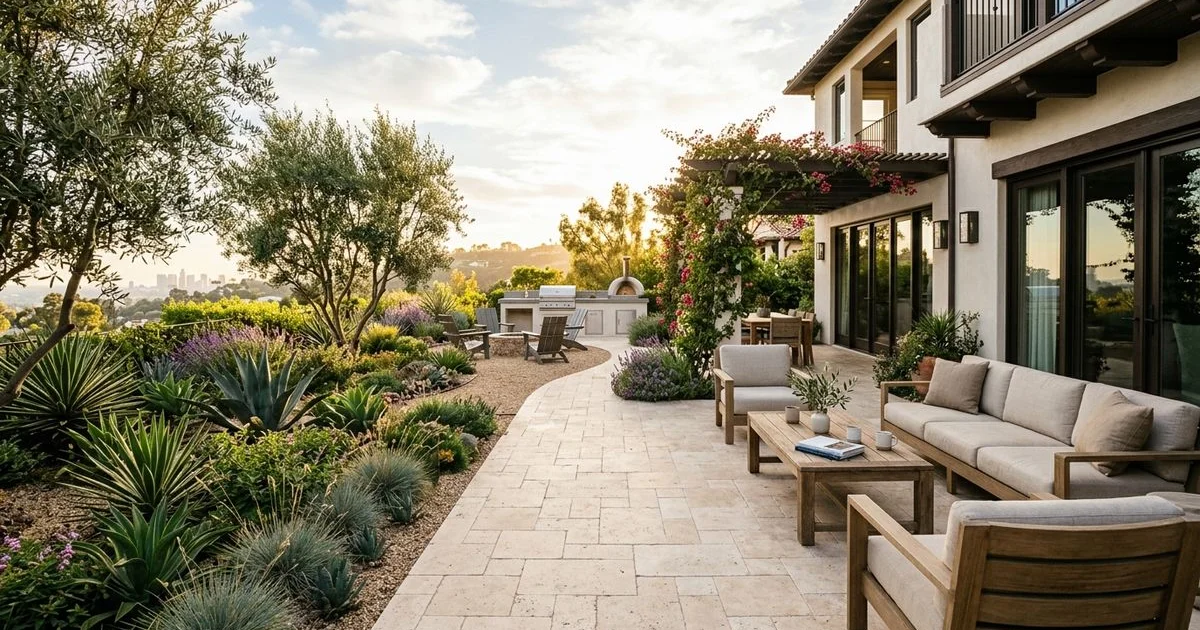
In practice, this makes design quality even more important. An HOA may object less when a project looks intentional, maintained, and consistent with the architecture. A rough patch of dirt with sparse shrubs invites pushback. A cohesive plan with hardscaping, structured planting, and visible irrigation logic usually reads as an upgrade, not a compromise.
That is why material selection and edge detailing matter. A neat transition from driveway to planting bed, or from patio to slope planting, can make the whole property feel more considered. When people think of drought resistant landscaping, they often picture sacrifice. A well-executed project tends to do the opposite. It makes the property easier to read, easier to maintain, and often more visually aligned with the terrain.
What a strong low-water, fire-resistant landscape actually feels like
The best projects are not judged by plant density alone. They are judged by how they hold up across a season. Do the slope plantings stay in place after rain? Does irrigation reach the roots without soaking the hardscape? Does the space feel open enough near the house and layered enough farther out? Does the yard still look intentional by late summer, when heat and dry air reveal every weak decision?
Those are the signs of good landscape design. On a San Gabriel Valley property, the answer usually comes from a combination of disciplined hardscaping, thoughtful grading, regionally appropriate plants, and irrigation that respects both the ordinance framework and the real behavior of the site. When those pieces work together, low-water landscaping does more than conserve. It gives the property structure.
A fire-resistant landscape built this way does not depend on one hero plant or one decorative feature. It depends on a chain of practical choices. The slope is stabilized. The water goes where it should. The planting is appropriate to the microclimate. The materials near the home help reduce fuel continuity. The result is not flashy, but it is durable, and durability is what makes the landscape worth living with year after year.
For homeowners in the San Gabriel Valley, that is the real benchmark. A landscape should fit the terrain, answer the climate, and support the house through heat, drought, and fire season without requiring constant rescue. When designed with care, a low-water landscape can do all of that and still feel like a place worth spending time in.