
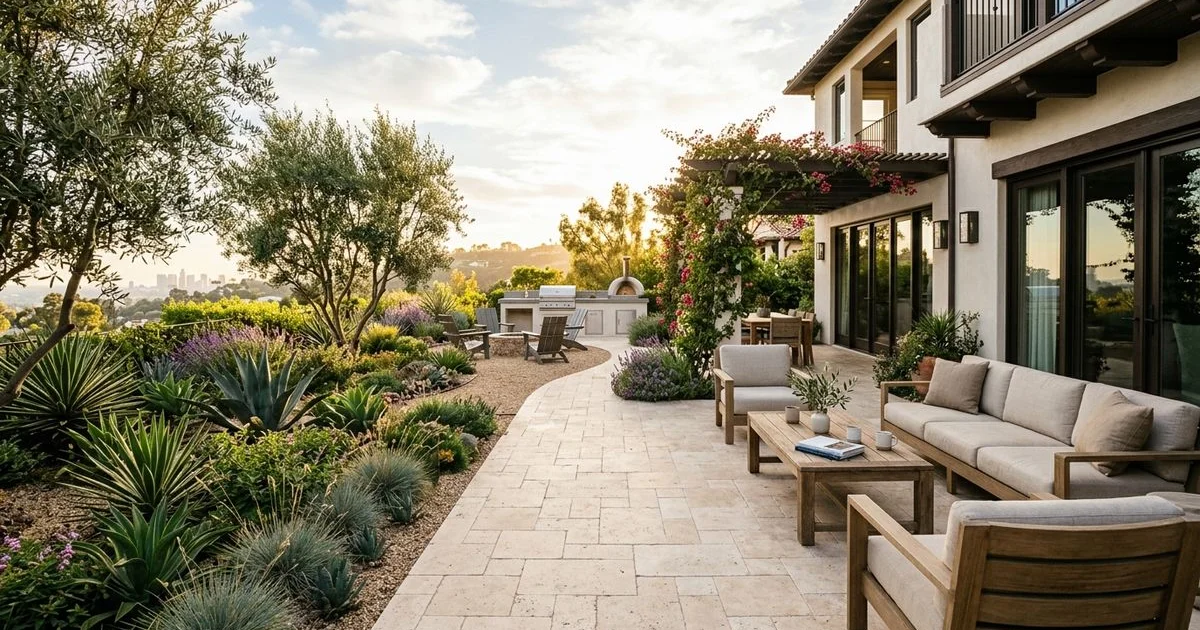
How to Make Hardscaping Work in a Drought-Resistant Garden
Hardscaping earns its keep when water is scarce. In a drought-resistant garden, it is not just decoration or a place to put a patio chair. It shapes how water moves, where heat collects, how a slope holds together, and how much planting space you can actually maintain without wasting irrigation. When hardscape is done well, it gives the garden structure and makes the planting feel intentional. When it is done badly, it can turn a yard into a hot, sterile surface that sheds water too quickly and leaves plants struggling at the edges.
In places like the San Gabriel Valley, where hillside landscaping, water conservation, and wildfire awareness all influence landscape design, hardscaping has to do several jobs at once. It has to control erosion, support drainage, reduce the need for thirsty turf, and still look like it belongs in the landscape. That balance is possible, but it takes more than swapping grass for pavers and calling it a day.
Start with the site, not the material
The first mistake people make is choosing hardscape materials before understanding the site. That usually leads to expensive rework later. Before turf removal or any major landscape change, the practical questions are simple: How is the irrigation currently performing? What kind of soil are you dealing with? Where does the sun hit hardest? Which areas dry out first and which stay damp after watering or rain?
Those questions matter because hardscaping changes the way a yard behaves. A concrete path on a south-facing slope will store heat differently than a decomposed granite walk under partial shade. A retaining wall can create a usable terrace on a hillside, but it can also concentrate runoff if the drainage behind it is not handled with care. In drought resistant landscaping, the point is not just to reduce water use. It is to build a landscape that can function gracefully with less water, less maintenance, and fewer inputs.
This is where landscape design becomes more than an aesthetic exercise. Good design starts by reading the property. A flat front yard, a narrow side yard, and a steep back slope all ask for different hardscape responses. The most successful projects I have seen in foothill settings began with observation. Not a sketch of a patio, but a close look at where water moves after a storm, where the soil erodes, and where people naturally walk.
Hardscape should support water-wise planting, not compete with it
In a drought-resistant garden, hardscape works best when it frames plantings rather than replacing them. That is especially important in California, where water-wise planning is not just a matter of preference. Landscape choices are tied to water conservation goals, efficient irrigation, and plant selection suited to local conditions.
The best hardscape layouts leave generous room for climate-appropriate plants. Think of paths that curve around planting beds, low walls that create pockets for shrubs and groundcovers, or seat walls that define a gathering space without forcing the entire garden into paving. A garden that leans too heavily on hard surfaces may solve a maintenance problem but create a heat problem. Surfaces reflect sunlight, raise ambient temperatures, and can make nearby plants more stressed than they need to be.
A well-balanced design uses hardscape to make the planting plan easier to maintain. That can mean narrowing a lawn area to a path or patio edge, replacing a strip of turf with a gravel bed and drought-tolerant shrubs, or using stepping stones to connect practical zones without paving everything in between. The goal is efficiency without visual heaviness.
Materials matter more than most people think
Not all hardscape materials behave the same way, and this becomes obvious once you have lived with a yard through a few seasons. Some materials absorb and radiate heat aggressively. Some feel cool underfoot but demand more maintenance. Some are ideal on level ground and awkward on slopes. The material choice should come from the site conditions and the intended use, not from a showroom sample alone.
In drought-resistant landscaping, permeable or semi-permeable surfaces can be useful where runoff is a concern, especially if the garden sits on a slope or in a spot that drains quickly. Gravel, decomposed granite, and properly installed paver systems can create useful surfaces without the visual and thermal burden of large expanses of solid pavement. The key word is properly installed. A loose surface with no edging will migrate. A paver field without drainage planning can hold water in the wrong places. A gravel path laid too thinly can become a maintenance problem within one season.
For residential gardens, I often think in terms of three material qualities: how hot it gets, how stable it stays, and how it looks next to the plants. That simple filter eliminates many poor choices. A sunbaked patio beside a delicate planting bed is rarely satisfying for long. A stable surface that visually complements native shrubs and grasses tends to age more gracefully.
Hillside landscaping needs hardscape with restraint
Slopes are where hardscaping can either rescue a site or ruin it. In hillside landscaping, the pressure is real. Gravity, runoff, and soil movement do not care how carefully the planting plan was drawn. A sloping yard needs structure, but it also needs room for roots, infiltration, and careful water movement.
Retaining walls, terracing, steps, and terraces can make a hillside usable, but they should be designed with erosion control in mind. That means thinking beyond the visible face of the wall. Water has to go somewhere. Soil behind walls needs drainage. Walkways need to be placed so they do not become channels during storm events. On a slope, even a small change in grading can affect whether water soaks in or tears through a bed.
The most successful hillside gardens use hardscape to break the slope into manageable pieces. A short stair run can connect levels more naturally than a long, intrusive ramp. A low retaining wall can create a planting shelf where drought-tolerant shrubs and bunchgrasses can establish without constantly washing out. A carefully placed rock or boulder can slow water just enough to help it soak in, while also giving the garden a sense of permanence.
There is also a visual consideration in hillside landscaping, particularly in areas where the slope is part of the neighborhood character. A hardscape-heavy yard can feel out of scale if it ignores the surrounding topography. The best work respects the hillside rather than trying to flatten it into submission.
A water-wise garden still needs drainage
People sometimes treat drought-resistant landscaping as if drainage stopped mattering once irrigation was reduced. The opposite is true. Less irrigation can make drainage feel less urgent on paper, but hardscape still changes stormwater runoff and the way soil receives moisture.
This is one of the most practical reasons to plan hardscape and planting together. If a patio slopes toward a bed with poor soil structure, the bed may get too much water during storms and too little during hot spells. If a walkway interrupts natural sheet flow, water may pool in one area and scour another. If a retaining wall traps moisture without escape, root health can suffer.
The garden should be shaped so water is guided, not merely drained away. That can mean subtle grading, shallow swales, permeable joints, or simply placing hardscape so it does not block the natural movement of water. In dry climates, the best drainage strategy often looks less like engineering and more like careful choreography.
This matters in new construction and renovation alike. Water-efficient landscapes are not only about reducing the amount applied through irrigation. They also depend on how the site handles rainfall and runoff. A well-designed yard protects both the hardscape investment and the plant material.
Firewise thinking belongs in the design conversation
In the foothills and around the San Gabriel Mountains, fire-responsible landscape design cannot be treated as an afterthought. Hardscaping can contribute to defensible-space planning when it is placed thoughtfully. A noncombustible patio, a clear circulation path, or a well-defined transition zone can improve both use and safety.
That does not mean turning the yard into a field of stone. It means understanding where dense planting makes sense, where low-growing, drought-tolerant plants are better choices, and where a hardscape break can help separate the house from more flammable garden elements. The edge between house and landscape deserves careful attention. So does the transition from one planting zone to another.
A few practical design moves tend to help:
- Keep hardscape simple near the house, where clarity and maintenance matter most.
- Use planting with lower, more open structure near walkways and entries.
- Avoid crowding walls, corners, and narrow passages with dense plant material.
- Let hardscape create clean access paths for maintenance and emergency use.
- Use the slope and site layout to your advantage, rather than fighting every contour.
Those choices do not replace careful planting, but they make the overall garden easier to manage and more resilient over time.
Choose plants that belong with the hardscape
Hardscape and planting should read as one composition. In drought resistant landscaping, that usually means choosing plants that can handle the same conditions hardscape and landscape specialists as the material around them. On a hot western exposure, that means plants that tolerate reflected heat. On a slope, it means plants that can root in place and help hold soil. Near a patio, it means plants with a habit that will not constantly spill into circulation space.
California native and climate-appropriate plants often make the most convincing companions to hardscape in this region. California buckwheat, California sagebrush, manzanita, ceanothus, monkeyflower, foothill penstemon, bunchgrasses, and San Gabriel oak all have a place in the regional vocabulary of drought-conscious design. Their forms work well against stone, gravel, and weathered masonry because they bring texture without demanding a lot of water.
A plant palette like that also keeps the garden from feeling artificially clipped around the edges. Drought-resistant gardens benefit from a little looseness. A shrub that softens a retaining wall, grasses that move in the wind beside a path, or a cluster of penstemon near a step can make even a simple hardscape feel alive.
The best planting plans are also microclimate plans. A north-facing side yard, a full-sun terrace, and a sheltered corner beside a wall should not all get the same plants. Nor should they get the same irrigation schedule. This is where many landscape designs fail. They are drawn as if every square foot of the yard experiences the same sun, heat, and moisture. It does not.
Turf removal is only the beginning
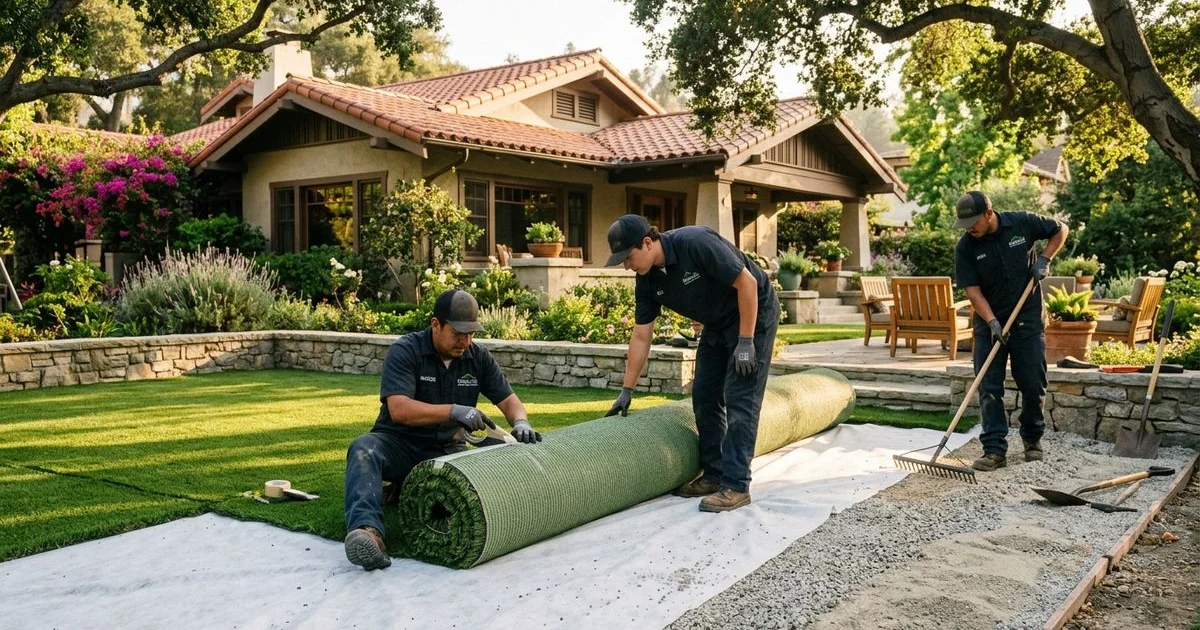
Many homeowners start by removing grass, which makes sense. Turf is often the least efficient use of water in a garden that needs to perform under dry conditions. But once the lawn is gone, the space does not automatically become a good landscape. It simply becomes an open field of possibility.
That is where hardscaping can help define purpose. A former lawn area might become a courtyard, a decomposed granite sitting space, a network of stepping stones through low planting, or a fire-responsible buffer zone with carefully placed surfaces and plants. The choice should reflect how the space is actually used, not just how much water it consumes.
Turf removal also offers a chance to reevaluate irrigation. If the existing system was built to keep lawn alive, it may be poorly suited to mixed planting and hardscape. Efficient irrigation, adjusted to the plant palette and soil conditions, can prevent overwatering in one zone while starving another. Water-wise design is rarely just about subtracting grass. It is about recalibrating the entire site.
Before making those changes, it is worth looking at the landscape in terms of sun exposure, soil type, and plant needs. In practice, that often reveals why certain areas have always performed badly. Sometimes the answer is not more water. It is less turf, fewer demands, and a better relationship between hardscape and planting.
HOA rules and water-wise choices
In some neighborhoods, homeowners worry that an HOA will limit drought-resistant landscaping choices. That concern is understandable, but water-efficient landscaping has become an important part of California’s landscape conversation, and homeowners’ associations cannot simply ban certain water-wise choices during drought-related restrictions.
That does not mean every association will be easy to work with. It does mean homeowners should feel confident planning for water conservation, efficient irrigation, and climate-appropriate planting without assuming they need to surrender the entire front yard to thirsty ornamentals. Hardscape can be a practical ally here because it helps create polished, maintained-looking spaces with less dependence on turf.
For many homeowners, that matters as much as the plant palette. A well-composed patio, path, or terrace can make a drought-resistant garden feel finished and intentional, which helps the design hold up visually even when the planting is more restrained than a traditional suburban yard.
Let the hardscape age honestly
A drought-resistant garden usually looks best when it accepts a little weathering. Stone darkens, gravel settles, timber greys, and planting matures around the edges. That aging is part of the charm. Overly polished hardscape can feel detached from the landscape, while materials that age naturally tend to blend with native and climate-appropriate plantings.
This is one reason I prefer restraint over spectacle. A garden does not need a dozen material changes to feel sophisticated. It needs a clear hierarchy. Maybe the main patio is one material, the paths another, and the retaining structure a third. Beyond that, the planting does the rest. Too many hardscape textures create visual noise and usually add maintenance without adding value.
Good hardscaping in a drought-resistant garden is not about maximizing the amount of stone or minimizing every living thing. It is about building a landscape that can handle heat, slope, water limits, and daily use with dignity. When the materials, drainage, planting, and site conditions all work together, the garden becomes easier to live with and more resilient season after season.
That is the real measure of success. Not how much was removed, but how well the space now functions.