
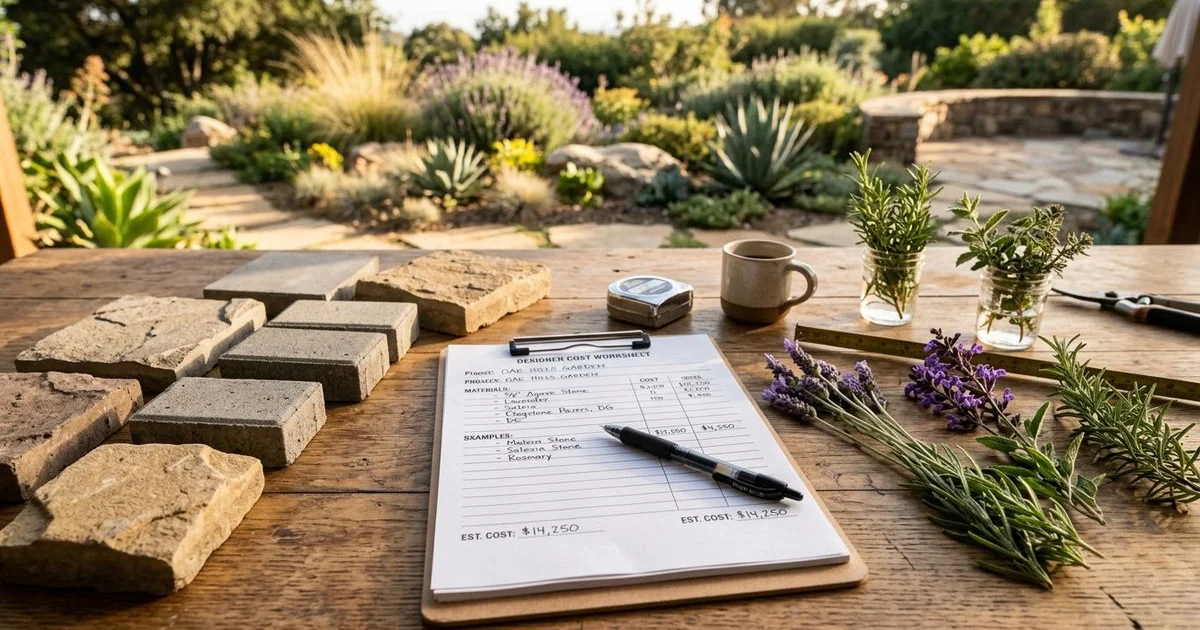
Landscape Design Basics for Turf Removal Projects
Removing turf is often the moment a property stops being a lawn and starts becoming a landscape. That change sounds simple until you stand in the yard and realize how many decisions are hiding under the grass. Where does water move after a storm? Which parts of the site bake in afternoon sun, and which stay cooler? Is the ground flat, or does it tilt just enough to send soil downhill when the first heavy rain arrives? On a turf removal project, those questions matter more than the grass itself.
In the San Gabriel Valley, turf removal is rarely just about replacing a thirsty lawn with a few shrubs. It usually sits at the intersection of water use, slope stability, firewise planning, and the visual character of the neighborhood. That is why the best results come from landscape design, not just plant shopping. A good design gives the yard a clear structure, manages runoff, supports drought resistant landscaping, and makes the finished space look intentional instead of patched together.
Start with the site, not the plant palette
The most common mistake I see after turf comes out is rushing straight to planting. People often want the yard to look finished quickly, so they choose plants first and solve the hard questions later. That usually leads to uneven irrigation, weak plant performance, and erosion problems that show up after the first rainy season.
A better approach starts with a slow walk around the property. Pay attention to irrigation, soil, sun exposure, and the way the land behaves during heat and rain. California’s water guidance points homeowners toward that kind of assessment for a reason. If you know where the hottest exposures are, where water tends to collect, and where the soil dries out fastest, you can match plant choices and layout to actual conditions instead of hopes.
This is especially important in turf removal because turf often masks problems. Grass can hide compacted soil, shallow grading issues, and poor drainage until it is gone. Once the lawn is removed, those issues are no longer softened by a thick mat of roots and regular irrigation. That is the moment to notice them, not after the first planting fails.
Microclimate matters too. A front slope facing southwest will behave differently from a shaded side yard tucked behind a wall. Even within one property, heat, wind, reflected light, and moisture can change quickly from one corner to the next. Landscape design that respects those differences tends to age well. Design that ignores them tends to need constant correction.
Water efficiency should shape the design from the beginning
In California, water-wise design is not an optional style choice. It is part of the practical framework for new and renovated landscapes, and the statewide Model Water Efficient Landscape Ordinance reflects that reality. Turf removal projects should be planned with water use in mind from the first sketch, not as an afterthought once the hardscape is already in place.
That means thinking about the irrigation system at the same time as the plant palette. If an old lawn system was built only to keep grass alive, it may not be suitable for mixed planting beds, slopes, or drought tolerant landscaping. Turf and shrub beds do not always need the same water delivery, and a retrofit should respect that difference. Efficient irrigation is not just about reducing waste, it is about getting water to the right place in the right amount.
Plant selection should also reflect water needs that fit the region. California’s plant and landscape guidance points users to WUCOLS, which helps with region-appropriate plant water use. That kind of reference is useful because it keeps the conversation grounded. Instead of asking whether a plant is “low water” in the abstract, you can ask how it performs in the local climate and where it fits within the site’s sun, soil, and irrigation conditions.
The best water-wise landscapes usually have a clear hierarchy. The plants closest to walkways or outdoor seating might get a little more attention, both visually and in irrigation placement. The more distant planting areas can be simpler and more climate tuned. This creates a landscape that feels designed rather than sparsely planted.
Turf removal often reveals drainage and erosion issues
Once turf is removed, water no longer has that broad, absorbent carpet to slow it down. That can be a good thing if the design handles runoff correctly, but on a slope it can also expose erosion problems very quickly. In hillside landscaping, design has to do more than look attractive. It has to hold soil in place and manage stormwater runoff without causing damage.
On slopes, the first goal is usually stabilization, not decoration. That may mean shaping the terrain carefully, using materials that help break the force of moving water, and selecting plants that can establish roots without needing excessive irrigation. In many hillside settings, drought tolerance and erosion control belong in the same sentence. The wrong combination, especially too much water on a slope, can undermine the soil you are trying to protect.
Hardscaping can help when it is used thoughtfully. Short retaining elements, defined steps, and well-placed pathways can interrupt long downhill runs of water and make a property easier to maintain. But hardscaping should not be treated as a substitute for drainage planning. A wall that looks solid on day one can still fail the landscape if runoff is not directed properly. I have seen projects where beautiful paving and clean edges were installed first, only to have water collect at the base of the slope because there was no real strategy behind the layout.
The practical question is not whether a site has a slope, but how water behaves on that slope. Even a modest grade can create movement that affects mulch, soil, and new plantings. Design choices should slow that movement, disperse it, or route it safely. That is the quiet work behind a successful turf removal project.
Hillside landscapes need plants that do more than survive
For hillside landscaping in the San Gabriel Valley, plant selection should do three jobs at once: support erosion control, fit the water budget, and work with the local fire and habitat context. That narrows the field in a useful way. It keeps the design rooted in function.
California native plants often fit this work well because they are adapted to local conditions and can be used in drought resistant landscaping that feels connected to the region. In the San Gabriel Valley, examples that naturally belong in this conversation include California buckwheat, California sagebrush, manzanita, ceanothus, monkeyflower, foothill penstemon, bunchgrasses, and San Gabriel oak. These are not just names to scatter around a plant schedule. They each bring different forms, textures, and seasonal behavior to the landscape.
A hillside planting scheme benefits from that variety. Bunchgrasses can help knit the ground visually and physically. Shrubs such as ceanothus or manzanita give structure and mass. Smaller flowering species like monkeyflower or foothill penstemon soften transitions and can make the space feel less rigid. The goal is not to turn the yard into a botanical collection. It is to build a planting pattern that holds up under heat, wind, and gravity.
There is also a habitat dimension to this work. The San Gabriel Mountains are home to many rare, threatened, and endangered species, which makes the surrounding landscape context especially meaningful. A residential landscape does not need to mimic wild habitat to be respectful, but it should avoid choices that ignore the local ecology entirely. Native habitat gardening can be practical and beautiful at the same time when it is designed with restraint.
Firewise decisions belong in the design, not as a retrofit
Fire-resistant planting and defensible-space planning are part of responsible landscape work in this region. In foothill and hillside areas, the question is not simply which plants look native or drought adapted. It is how the whole composition behaves if embers are present, especially near the home.
That means thinking about placement, spacing, and maintenance as carefully as species choice. Plants suitable for local gardens can still be arranged in ways that reduce risk. Clear zones near structures, sensible separation between plant masses, and the avoidance of dense, continuous fuel near the house all matter. Firewise landscaping is less about creating a sterile yard and more about shaping a landscape that can be maintained with clear intent.
This is one of the reasons turf removal projects should be planned with the home’s edges in mind. A new landscape that looks great in the center of the yard but crowds the structure with highly flammable buildup is not a real improvement. The design should create breathing room where it matters most and support healthy, manageable planting beyond that.
In practice, the best firewise landscapes are usually calm and legible. They do not rely on chaotic variety. They use repetition, measured spacing, and plants that are suited to the site rather than oversized specimens squeezed into the wrong place. That kind of restraint also helps the landscape feel mature sooner.
Hardscaping gives the yard structure, but only when it serves the site
Hardscaping can be a powerful part of a turf removal project, especially when the goal is to create outdoor rooms, control grade changes, or reduce irrigated area. But hardscape should be chosen for function first. A well-placed path can solve circulation problems. A low wall can help define a planting terrace. A permeable or carefully graded surface can support drainage in ways that turf never could.
The temptation, after removing a lawn, is to overbuild. That often happens when people are unsure how much planting they want. But more paving is not the answer to every turf problem. If the yard needs more shade, more erosion control, or more water capture, a design heavy on hardscape can actually make conditions harsher. The right balance depends on how much usable outdoor space is needed and how the site handles water.
In the San Gabriel Valley, the visual character of many hillside properties benefits from a blend of structure and softness. Hardscape defines the human use of the yard. Planting reconnects the project to the broader landscape setting. A good design lets both elements do their job without competing for attention.
HOA rules are not the final word on water-wise design
Homeowners in associations sometimes worry that turf removal means getting trapped between water restrictions and HOA expectations. California water restriction guidance makes an important point here: homeowners’ associations cannot prohibit certain water-efficient landscaping choices during drought-related restrictions. That does not erase every architectural or community rule, but it does matter when people are deciding whether they can move forward with a water-wise plan.
From a design standpoint, that can be liberating. It means a property owner can pursue drought tolerant landscaping and reduce turf without assuming the association has veto power over every water-saving choice. Still, the landscape should be designed with the neighborhood context in mind. A project that is visually coherent, tidy, and well maintained tends to raise fewer objections than a patchy conversion that looks unfinished.
This is another place where design discipline pays off. Edges should be clean. Plant masses should be intentional. Irrigation should not overspray onto hardscape. Even a modest planting plan looks more credible when it is laid out with care.
A practical sequence for turf removal projects
There is no single formula that works for every property, but the order of operations matters. If I were guiding a homeowner through a turf removal project in the San Gabriel Valley, I would keep the process grounded in professional hardscaping services five priorities that can be handled before the first shovel goes in.
First, assess the site carefully, including soil, sun exposure, irrigation, slope, and drainage. Second, decide where hardscaping actually solves a problem, instead of adding it because the lawn is gone. Third, choose plants that fit the microclimate and water conditions, using region-appropriate guidance rather than guesswork. Fourth, shape the planting plan around erosion control and firewise needs if the property includes slopes or hillside conditions. Fifth, retrofit irrigation so the new landscape can be maintained efficiently.
That sequence sounds simple, but it prevents a lot of expensive do-overs. I have watched projects succeed because the owner was willing to pause and solve grading or irrigation issues before filling the yard with plants. I have also seen beautiful material installed over bad drainage, only to be moved or replaced within a season. The difference is usually planning, not budget.
The best turf removal projects look inevitable
When a turf removal project is done well, the landscape feels as though it was always meant to be there. The plantings fit the light. The slope is stable. Water goes where it should. The hardscape supports daily use without overpowering the yard. The irrigation system works with the design rather than fighting it. That sense of ease is not accidental.
In the San Gabriel Valley, where water-wise design, hillside conditions, and fire-aware planting all matter, the most successful landscapes are rarely the flashiest ones. They are the ones that read the site correctly and respond with restraint. A lawn replacement can become a stronger landscape than the original turf ever was, but only if design comes first.
Turf removal is not the end of a yard. It is the beginning of a more deliberate one. When the replacement is shaped around climate, slope, drainage, and use, the result is practical, resilient, and rooted in the place where it stands.