
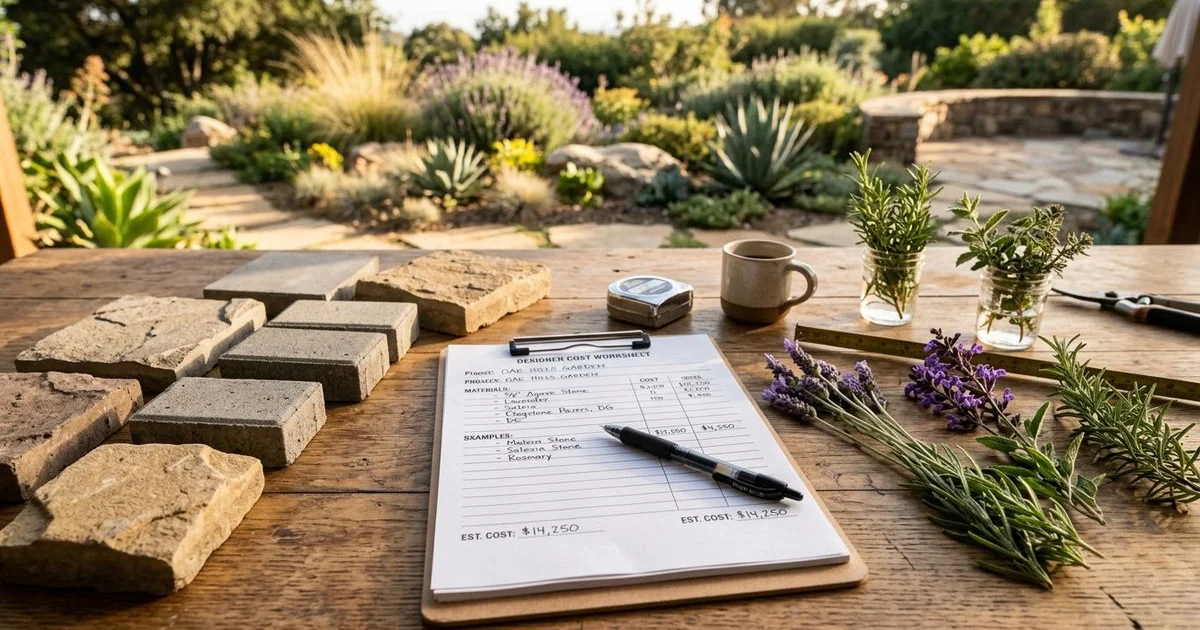
Native Habitat Gardening Ideas for Residential Yards
Native habitat gardening in a residential yard is not just a style choice in the San Gabriel Valley, it is a practical response to climate, slopes, fire risk, and the reality of water use in Southern California. A good native garden does more than look regional. It works with the site instead of fighting it. That means reading the sun, understanding the soil, looking at drainage patterns after rain, and choosing plants that can handle the conditions already present on the property rather than the conditions one wishes were there.
That approach matters even more in a place where hillside properties, water conservation, and defensible-space concerns often overlap. Many yards in the San Gabriel Valley sit on visible slopes or near foothill terrain, and those settings call for plantings that hold soil, manage runoff, and remain resilient through dry stretches. Native habitat gardening is one of the few landscape approaches that can satisfy those goals without turning a yard into a maintenance burden.
Start with the site, not with the plant list
The most successful native gardens begin with a basic assessment of the yard. Before any turf is removed or any planting plan is drawn, it is worth asking how the site behaves across the day and across the seasons. Which areas receive full sun for most of the afternoon? Where does the ground stay wet longer after irrigation or rain? Which parts of the yard dry out fastest? On a lot with a slope, how does water move downhill, and where does it tend to collect?
This kind of observation sounds simple, but it prevents expensive mistakes. A plant that thrives on an open sunny slope may struggle in a pocket of reflected heat near a wall. A species that likes lean, fast-draining soil may fail in a low area that stays damp. California’s water conservation guidance emphasizes that irrigation, soil, sun exposure, and plant selection should be assessed together before turf removal. That advice is especially useful in residential yards, where the temptation is often to replace a lawn quickly and then adjust later. Later usually costs more.
The same principle applies to plant water needs. The WUCOLS framework is useful because it sorts plants by regional water use, which helps homeowners make plant choices that match realistic irrigation expectations. That is more reliable than shopping by appearance alone. A plant may look appropriate for a native garden but still need more water than a homeowner wants to provide. Matching the plant to the site and the water budget is what keeps the landscape healthy after the first flush of enthusiasm fades.
Why native habitat gardening fits the San Gabriel Valley
The San Gabriel Valley has a strong visual connection to the surrounding hills and mountains, and that landscape context should shape residential design. There is a reason drought-tolerant planting is so often discussed alongside new construction and hillside properties in this region. The terrain, the climate, and the local ecology all point in the same direction.
A native habitat garden brings a more natural rhythm to the yard. Instead of trying to maintain an artificial uniformity, it can support layers of plant life that echo local habitat. That does not mean recreating a wild landscape in a suburban lot. It means using native shrubs, perennials, bunchgrasses, and trees in a way that feels orderly enough for a home while still serving ecological and practical purposes.
The broader benefit is water efficiency. California’s Model Water Efficient Landscape Ordinance has made water usage a central issue in new and renovated landscapes, and it encourages native or climate-appropriate plants, alternative water sources, and efficient irrigation. For a homeowner, that translates into a design ethic that values performance. A landscape should be able to stay attractive and functional without excessive input.
There is also a deeper value in planting for habitat. The San Gabriel Mountains support many rare, threatened, and endangered species, and that region sets the ecological tone for nearby neighborhoods. A residential yard will never replace intact habitat, but it can still offer nectar, shelter, and seasonal structure for birds and beneficial insects. When enough yards do that work, the result is not trivial. It creates a more connected patchwork of living spaces across the neighborhood.
The plants that tend to earn their keep
In practice, a native habitat garden works best when it relies on plants that are already adapted to the local climate and soil conditions. In the San Gabriel Valley, that usually means species associated with chaparral, foothill, and coastal-sage style plant communities, especially where sun exposure is strong and water should be used carefully.
California buckwheat is one of the most reliable choices for a dry, sunny yard. It offers seasonal texture, handles lean conditions well, and fits naturally into a water-wise design. California sagebrush is another useful foundation plant, especially where a lighter, airy shrub is wanted rather than a dense hedge. Manzanita can provide structure and year-round presence, though it needs room and good drainage. Ceanothus is widely valued for its blooms and habitat value, but it rewards proper placement, since overwatering can shorten its life. Monkeyflower and foothill penstemon bring color and seasonal interest, and bunchgrasses can knit the composition together while helping the garden feel less static.
A locally named native such as San Gabriel oak may also be appropriate in larger yards with enough space for a tree canopy. Not every residential lot can support a tree of that scale, and that is where judgment matters. A tree is not a decorative object. It changes the proportions of the yard, the shade patterns, and the root zone over time. When placed well, though, a native oak can anchor the entire landscape and provide a sense of permanence that smaller plants cannot.
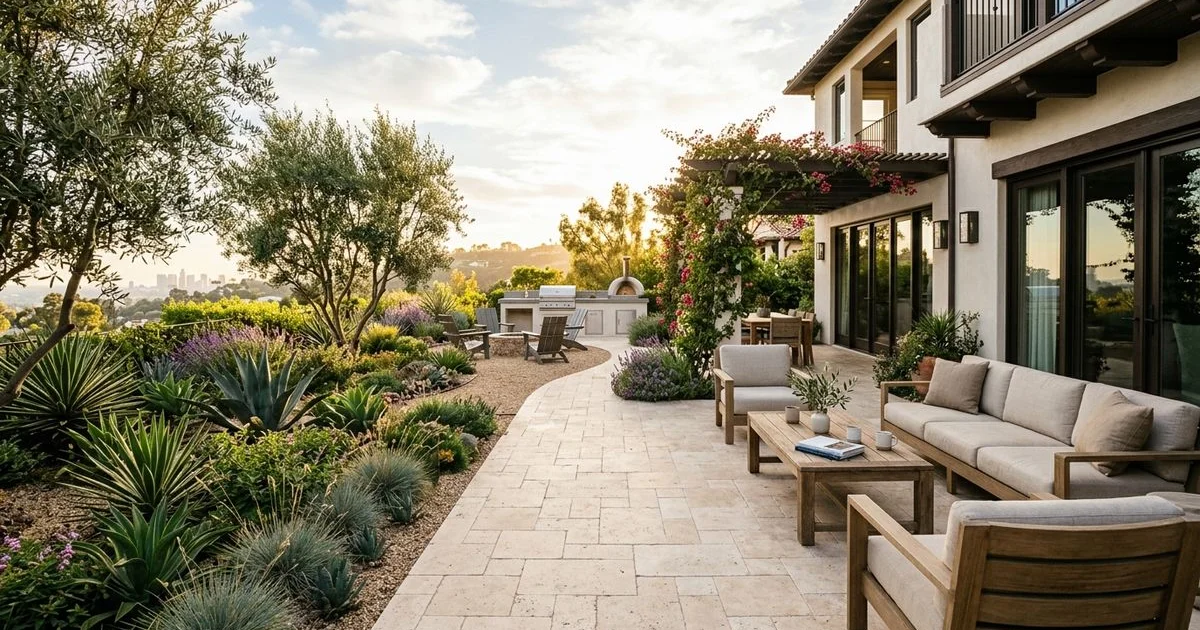
The most effective plant combinations are usually less about rare specimens and more about composition. A few stronger shrubs, some lower flowering perennials, and a drift of bunchgrasses can create a garden that feels intentional without requiring a rigid pattern. That balance is important in residential settings, where homeowners often want a landscape that looks designed, not improvised.
Hillsides need a different kind of thinking
Hillside landscaping is where native habitat gardening becomes especially practical. Slopes are vulnerable to erosion, and they make irrigation and maintenance harder than they are on flat ground. Water tends to move downhill, which can strip topsoil if the planting is thin or the runoff is unmanaged. On a steep yard, the planting plan has to do more than look attractive from the street. It has to stabilize the soil and break the force of moving water.
That is why slope planting should lean toward drought tolerance, root structure, and ground coverage. Dense plant spacing can help the soil hold together, but only if the plants are suited to the microclimate and do not require excessive irrigation. A slope that is overwatered can become just as troublesome as a slope that is underplanted. The goal is not to saturate the hillside. The goal is to slow water down, spread it out, and let it soak in.
Hardscaping can be useful here when it is used carefully. Retaining elements, stepping paths, and other hardscape features can make a slope more usable and reduce wear on the planting areas. The mistake is to treat hardscaping as a substitute for planting. On a hillside, the two need to work together. Landscape design should combine grade changes, drainage handling, and plant placement so the yard functions as a system. A well-placed path or terrace can protect the slope, but the living plant layer still does the long-term work of erosion control and habitat support.
One practical lesson from hillside projects is that small decisions matter. A narrow planting shelf with a few well-chosen shrubs can outperform a broader area filled with the wrong species. Likewise, a slope that receives runoff from a driveway or upper patio may need a different planting density than a protected side yard. These are not dramatic design flourishes, but they make the difference between a landscape that settles in and one that keeps failing in patches.
Firewise choices belong in the plan from the beginning
Fire-resistant thinking should not be treated as an afterthought, especially in areas near the San Gabriel Mountains. Native habitat gardening and firewise landscaping are not opposing ideas. They can be aligned when the design respects ember exposure, plant spacing, and maintenance access. The point is not to strip a yard bare. The point is to reduce vulnerability while keeping the landscape healthy and water wise.
This is where plant Pasadena landscapers selection and placement matter more than labels. Some native plants are appropriate in a fire-conscious yard because they fit the local ecology and do not encourage heavy, continuous fuel. Others may be better used sparingly or placed farther from the structure. The structure of the planting matters as much as the plant itself. Clumping species, spacing that allows air movement, and clear zones near the house all contribute to a more defensible landscape.
For many homeowners, the challenge is balancing the desire for a lush native garden with the need for safety near the dwelling. That balance is possible, but it takes discipline. It often means using lower, less combustible plantings close to the home, with more layered native habitat farther out in the yard. It may also mean relying on hardscaping to break up plant masses and create practical access routes for maintenance. Good landscape design does not ignore fire risk. It incorporates it into the overall composition from the outset.
Irrigation retrofits can make or break the project
A native garden still needs water, especially during establishment. The mistake many people make is to assume that drought tolerant landscaping means no irrigation planning. That is not how healthy landscapes are established. Even climate-appropriate plants need a thoughtful transition period, and the irrigation system has to match that reality.
Retrofits often start with the basics. Old spray systems that water sidewalks and driveways waste more than money. They also create uneven soil conditions that can hurt sensitive natives. Efficient irrigation should be matched to plant zones, sun exposure, and soil behavior. A dry slope, a shaded side yard, and a planting bed near the house may all need different schedules. A single blanket approach tends to fail because the yard is not uniform.
It is also worth considering the long game. Once native plants are established, they typically do better with deep, infrequent watering than with constant surface moisture. That means the irrigation design should support deep roots rather than shallow dependency. Homeowners who understand this early tend to get better results and lower water use over time. The plant palette and the irrigation strategy should be chosen together, not in sequence.
Turf removal should be deliberate, not reactive
Many residential yards begin with too much turf for the way they are actually used. Turf removal can be an excellent first step toward a native habitat garden, but only if the replacement plan is clear. Removing lawn without understanding the soil, runoff, slope, and sun exposure can leave a yard more vulnerable than before. It can also create a patchwork of struggling plants where a simple, coherent design should have been.
A better approach is to identify the parts of the yard that truly need durable open space, then convert the rest into planting zones that do useful work. Some properties need a small area for circulation or play, but not a full lawn. Others can replace most turf with native beds, permeable hardscaping, and planting that reduces heat and irrigation demand. The right answer depends on the property, not on a trend.
The California water agencies have made the message clear enough. Before removing turf, assess the site. That advice may sound cautious, but it saves homeowners from a common trap: treating lawn removal as the finish line when it is really the beginning of the design process.
HOA rules do not erase water-efficient choices
Homeowners in planned communities sometimes assume that an HOA can block water-wise landscaping, especially during drought-related restrictions. California water restriction guidance makes clear that associations cannot prohibit certain water-efficient landscaping choices under those conditions. That matters for homeowners who want to move toward native planting but worry about violating community rules.
Still, even when the rules allow the change, the social side of the project matters. A native habitat garden tends to succeed more smoothly when it looks deliberate. Clean edging, a thoughtful layout, and enough hardscaping to keep the property functional can make a water-wise yard feel resolved rather than unfinished. The visual character of the San Gabriel Valley, especially on slopes and visible streets, benefits from that kind of care. People notice whether a landscape looks managed. Native does not need to mean messy.
Designing for habitat and maintenance at the same time
The best residential native gardens age gracefully because they are built around maintenance that real homeowners can actually sustain. That may sound obvious, but it is the point most often missed. A garden that depends on constant correction is not a good design. A garden that can be pruned seasonally, irrigated efficiently, and left to mature without frequent intervention is far more valuable.
That usually means being conservative with plant count, resisting the urge to crowd too many species into a small bed, and leaving room for plants to reach their natural size. It also means accepting some seasonal variation. Native gardens change through the year. They may look sparse at one moment and full at another. They do not aim for the unnaturally uniform appearance of a high-input ornamental bed. They aim for resilience, and that carries a different aesthetic.
For residential yards in the San Gabriel Valley, that resilience is worth pursuing. Water-wise design, slope stability, fire awareness, and habitat value can all coexist in the same landscape when the plan is grounded in site reality. The result is not just a pretty yard. It is a landscape that fits the region, responds to the climate, and gives something back to the place it occupies.