
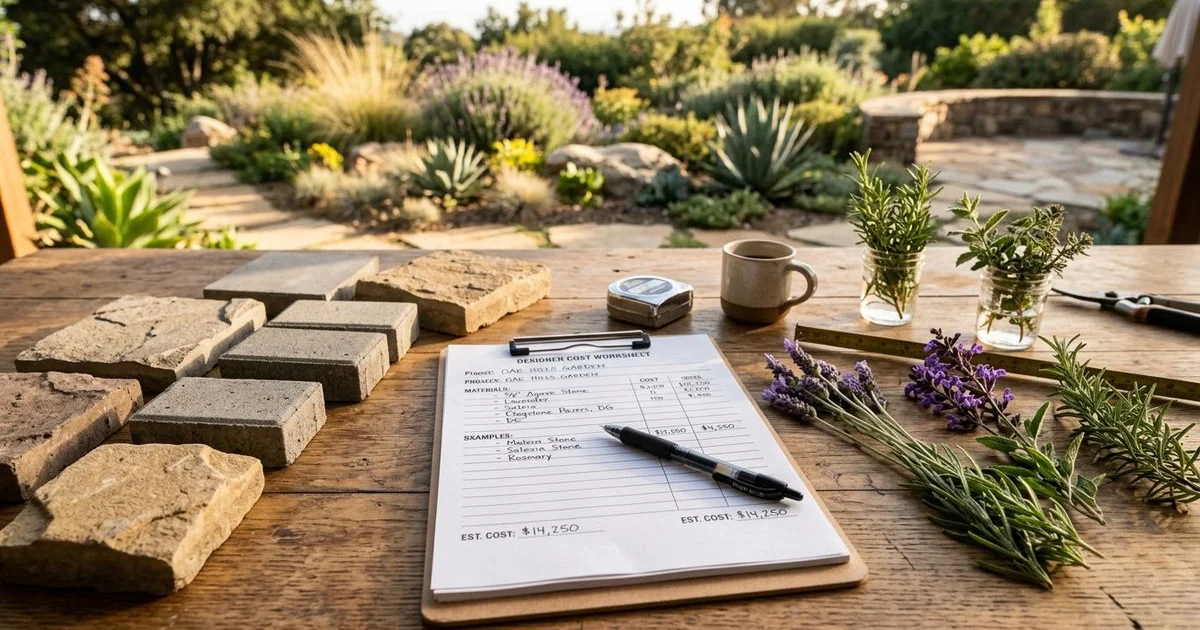
How to Select Bunchgrasses for a Low-Water Landscape
Bunchgrasses earn their place in a low-water garden the hard way. They do not rely on showy flowers to carry the design, they do not need weekly irrigation to stay upright, and they are one of the few plant groups that can make a landscape feel finished without making it thirsty. In the San Gabriel Valley, where hillside landscaping, drought resistant landscaping, and firewise planting all overlap with the practical realities of sun exposure, slope, and water limits, bunchgrasses often do more work than people expect.
They soften hardscape, catch light, hold soil, and give a planting scheme movement through the seasons. They can sit beside boulders, pathways, and retaining walls without looking forced. They also fit naturally into California water-wise design, especially when the goal is to reduce turf, control runoff, and build a landscape that stays attractive with efficient irrigation rather than constant attention. The trick is choosing the right grass for the right place, and that starts with looking hard at the site before you fall in love with a plant tag.
Start with the site, not the catalog
The California water agency guidance is plain about where to begin: assess irrigation, soil, sun exposure, and plant selection before removing turf. That order matters. A bunchgrass that thrives on a sunny slope may sulk in a shaded courtyard. A species that handles lean, fast-draining soil may struggle where water sits after a storm. A plant that looks airy in a nursery can turn into a dense clump once established, and if you have not accounted for width, it can crowd adjacent plants or interfere with a walkway.
This is especially important in the San Gabriel Valley, where hillside properties, foothill exposures, and neighborhood microclimates can change from one side of a house to the other. South-facing slopes can bake. North-facing areas may stay cooler and hold moisture longer. Near masonry, paving, and other hardscaping, reflected heat can push a plant harder than the rest of the yard. A bunchgrass selected for open ground may need a different companion plant if it is placed near a wall or under the drip line of a tree.
If you are evaluating a site for a low-water landscape, think in practical layers. Notice where rainwater moves, where it collects, and where it disappears quickly. That tells you a lot about drainage and stormwater runoff, which are central concerns in drought resistant landscaping. On a slope, this same observation paver patio specialists helps with erosion control. On a flatter site, it tells you whether your irrigation design can be simplified or whether one area needs a different strategy.
What bunchgrasses actually do in a design
Bunchgrasses are not filler plants. Used well, they are structural plants that bridge the gap between shrubs, groundcovers, and hard surfaces. Their form brings clarity to a landscape design, especially when the plant palette includes California native plants and other climate-appropriate species. They can line a path, repeat through a slope, or mass in a way that creates rhythm without feeling rigid.
In practical terms, bunchgrasses help in three ways. First, they reduce visual weight, which is useful when hardscaping includes stone, concrete, or retaining walls. Second, they cover soil without the maintenance burden of turf. Third, they work well in mixed plantings that aim for habitat value, because their clumps and upright blades add texture and shelter.
On hillsides, bunchgrasses are especially useful because they root in dense clumps that help hold soil in place. That does not make them a substitute for proper grading or drainage, but it does make them a useful part of an erosion-aware planting plan. For slopes in the San Gabriel area, that matters. The visual character of hillside neighborhoods often depends on plantings that stabilize the ground while still fitting the regional look, and bunchgrasses help do both.
The qualities that matter most
A good bunchgrass for a low-water landscape should be judged by more than how it looks in spring. The best selections usually have a few traits in common.
They should match the site’s sun exposure. Many low-water bunchgrasses perform best in full sun, especially on warm slopes and open front yards. If your site gets afternoon shade, or if taller structures create pockets of filtered light, choose accordingly rather than assuming one grass will fit everywhere.
They should fit the soil and drainage pattern. California’s landscape guidance emphasizes checking soil before plant selection, and for bunchgrasses that is not optional. Some tolerate lean soil beautifully. Others need better drainage to avoid decline. If your property sits in an area where water lingers after irrigation or rain, that affects the choice just as much as drought does.
They should align with your irrigation plan. A low-water landscape is not the same as a no-water landscape. New plantings often need establishment irrigation, and efficient irrigation matters more than guesswork. Bunchgrasses that settle in with less water later are far easier to manage than plants that demand frequent correction from the start.
They should suit your maintenance style. Some grasses stay compact and tidy. Others expand into larger mounds that need occasional dividing or more space than people expect. If you prefer a clean edge beside hardscape, size and form matter as much as drought tolerance.
They should fit the larger palette. In a landscape that includes California buckwheat, California sagebrush, manzanita, ceanothus, monkeyflower, foothill penstemon, or a locally named native such as San Gabriel oak, a bunchgrass should reinforce the overall character rather than compete with it.
A practical way to narrow the choices
When people get overwhelmed, I suggest they slow down and choose by function first, appearance second. That is usually the more reliable path in drought tolerant landscaping.
That sequence may feel unglamorous, but it saves people from the most common mistake, which is buying a pretty clump and then trying to force it into the wrong place.
Bunchgrasses on slopes and foothill properties
Hillside landscaping demands more discipline than level ground. Water runs downhill, roots need time to establish, and plantings must help with erosion control without creating extra maintenance. That is where bunchgrasses often shine. Their clumping habit allows them to anchor soil while leaving enough open ground for mulch, decomposed granite, or low-growing companions to play a supporting role.
On a slope, spacing matters. Too close, and the planting can feel crowded before it settles. Too far apart, and the soil may stay exposed longer than is comfortable. The right spacing depends on the mature size of the grass and the rest of the design, but the principle is simple: give each clump enough room to reach its natural shape. That reduces stress and keeps the planting readable from a distance.
For foothill gardens in the San Gabriel Mountains area, the goal is often not to create a formal lawn replacement but to echo the local landscape with more restraint. Bunchgrasses can do that elegantly. They can be paired with shrubs that reflect the same regional palette and with hardscaping that helps manage grade changes. When a slope is designed well, the grass does not just survive there, it looks as though it belongs there.
Firewise considerations are part of the selection process
In much of Southern California, fire-resistant planting and defensible-space planning are not separate from landscape design, they are part of it. The local context around the San Gabriel Mountains makes that even more relevant, since the area includes habitat with rare, threatened, and endangered species, and many homeowners are thinking carefully about how to balance beauty, native planting, and firewise choices.
Bunchgrasses are not all the same in this regard. Some stay neat and low. Others can become more open or carry more dry material if not managed. The key is not to assume that a grass is automatically safe or unsafe, but to consider how it will be maintained and where it is placed. Near structures, the way a planting is arranged matters as much as the plant itself. Near pathways, walls, and fences, it helps to keep the design open and deliberate so the landscape reads as cared for rather than dense.
Firewise planning also intersects with water use. A well-managed low-water landscape is often easier to maintain in a way that supports defensible space, because it relies on plants that are adapted to local conditions rather than thirsty ornamentals that require constant intervention. That does not make maintenance disappear. It does mean the landscape can be designed with both water conservation and fire awareness in mind from the start.
Turf removal is not just a plant choice
Many projects begin with the desire to remove turf, and that makes sense. Turf is often the least efficient way to use water in a decorative landscape. But turf removal should be treated as a redesign, not a swap. California guidance recommends evaluating irrigation, soil, sun exposure, and plant selection before the turf comes out. That approach is smart because the new planting has to solve the old problems, not inherit them.
Bunchgrasses are often part of that solution. They can establish a cleaner framework than lawn, especially in areas where mowing is awkward or where slope makes turf impractical. They also fit naturally into a mixed planting that uses native species and other climate-appropriate plants to reduce water demand. If the space previously required frequent irrigation, it may be worth rethinking irrigation retrofits at the same time, because the efficiency of the system can matter as much as the plant palette.
One of the quiet benefits of choosing bunchgrasses during a turf conversion is that they lend the garden a sense of continuity. A lawn disappears quickly. A clump of grass gives the eye a familiar read of open green, but without the expense and water demand of a traditional turf area. That helps many homeowners make the transition without feeling as though the yard has become austere.
How bunchgrasses work with other California plants
Bunchgrasses tend to look best when they are not treated as stand-alone specimens. They make more sense in a layered planting that includes shrubs, subshrubs, and flowering natives suited to the site. California buckwheat and California sagebrush bring a dry, regional feel. Manzanita and ceanothus add structure. Monkeyflower and foothill penstemon bring seasonal color. Bunchgrasses weave among them and keep the composition from becoming too heavy.
This is where landscape design gets interesting. A garden that relies only on shrubs can look static. A garden of only grasses can feel sparse if the site is large. Mixed together, with the right spacing and a hardscape framework that supports circulation and drainage, the planting can read as cohesive and intentional. That is especially true in drought resistant landscaping, where every plant has to justify its place in the overall system.
The best pairings usually respect scale. A low, compact bunchgrass can sit near a path or courtyard edge without obscuring views. Taller forms work better where the landscape needs a softer screen or a more meadow-like effect. In either case, the grass should complement the surrounding plants rather than vanish into them.
HOA rules and local water restrictions
Homeowners often worry that an HOA will block a water-wise change, especially during drought-related restrictions. California water restriction guidance makes clear that homeowners’ associations cannot prohibit certain water-efficient landscaping choices during those periods. That does not remove every design constraint, but it does give homeowners room to move toward drought tolerant landscaping without assuming they are boxed in by a neighborhood rulebook.
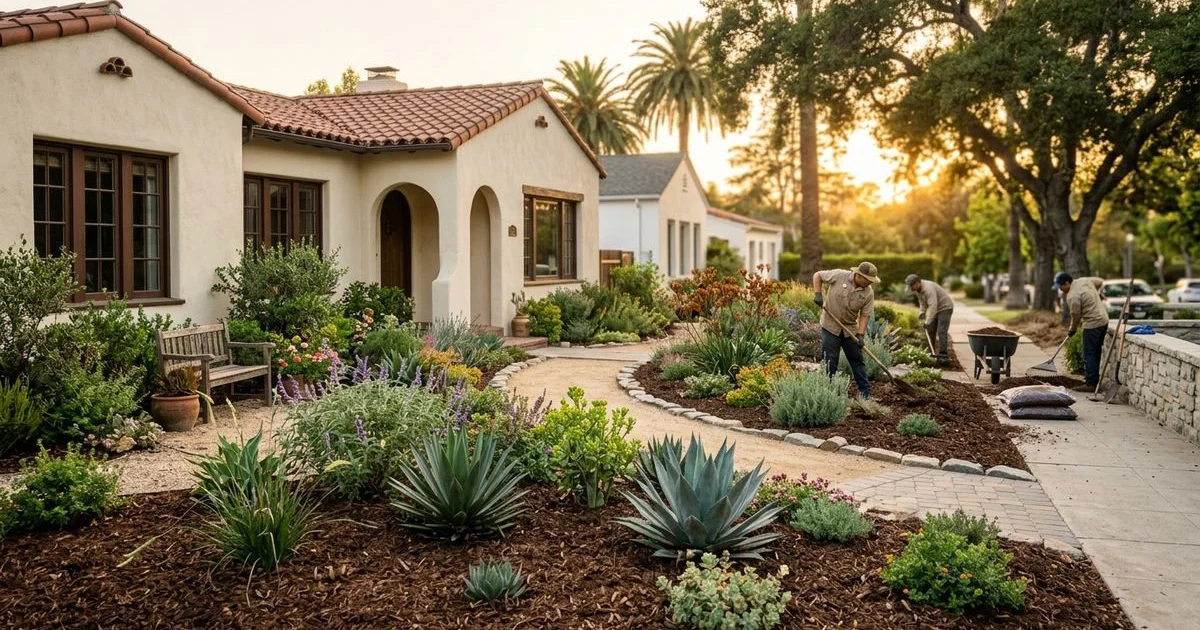
That matters in practice because many water-wise projects happen in communities with visible standards. People want a low-water front yard that still feels polished and appropriate. Bunchgrasses are useful here because they tend to look intentional from the street when they are repeated and placed with care. They can also help tie the planting to nearby hardscaping, making the yard feel designed rather than simply converted.
If you are dealing with HOA review, documentation usually goes further when the landscape plan is specific. Saying that the yard will use California native plants, efficient irrigation, and low-water bunchgrasses is more persuasive than saying you will “replace the lawn with something nicer.” The first language speaks to water use, maintenance, and design. The second invites questions.
A final way to judge the right plant
When a bunchgrass is right for the site, you can usually feel it before you see it full grown. It fits the slope. It respects the drainage. It looks at home beside the hardscape. It does not need coddling to survive a hot stretch, and it does not look out of place when the rest of the garden is carrying the seasonal load.
A low-water landscape is not built from one brilliant plant. It is assembled from plants that cooperate with the climate, the grade, the irrigation plan, and the home’s architectural setting. Bunchgrasses are valuable because they make that cooperation visible. They bring movement without fuss, form without excess, and resilience without sacrificing visual calm.
For San Gabriel Valley properties, especially those shaped by hillsides, sun, and water awareness, that combination is hard to beat. Choose with the site in mind, give the plant room to mature, and let the grass do what it does best, hold the design together while asking very little in return.